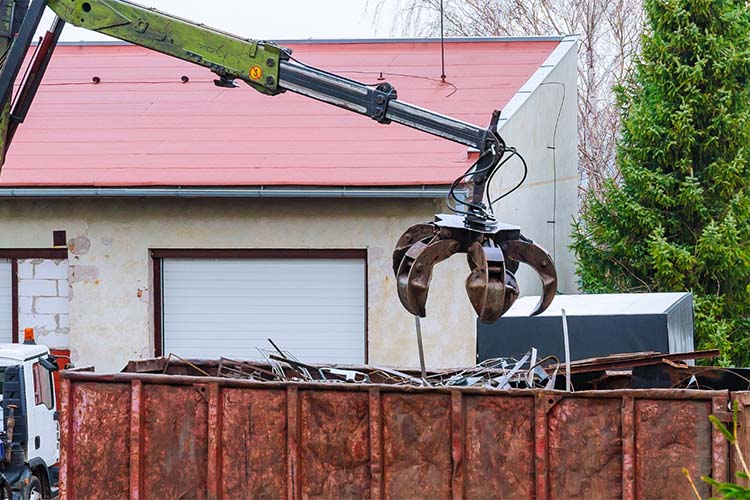
Grapple trucks play an important role in collecting bulky waste, storm debris, tree limbs, construction materials, and other oversized items that cannot be handled through standard waste collection. For municipalities, contractors, and waste haulers, renting a grapple truck provides access to specialized equipment without the significant investment required to purchase a new vehicle.
Whether you’re responding to storm cleanup, supporting a temporary project, or expanding your fleet during peak demand, the right grapple truck rental can help you complete jobs more efficiently while maintaining operational flexibility.
This guide explains how to choose the right grapple truck rental, what features to look for, and how to prepare your operation before putting the truck into service.
When Should You Rent a Grapple Truck?
Renting a grapple truck can be a practical solution whenever your operation needs specialized lifting equipment without the long-term commitment of ownership. Rather than investing in equipment that may only be used occasionally, renting allows fleets to access the right truck when demand increases.
Renting may be the right option if you need to:
- Support storm debris cleanup after severe weather
- Handle seasonal vegetation or brush collection
- Collect bulky residential waste and large household items
- Transport construction and demolition debris
- Replace a truck that is temporarily out of service
- Support temporary contracts or municipal cleanup projects
- Preserve capital for other business investments
Many organizations also choose to rent before purchasing so they can evaluate equipment in real-world operating conditions.
Step 1: Understand Your Project Requirements
Before selecting a grapple truck rental, take time to evaluate how the truck will be used. Choosing the right grapple truck starts with understanding your workload, the type of material being collected, and the conditions operators will encounter throughout the project.
Questions to consider include:
- What type of debris will be collected?
- How much material will be handled each day?
- Will work take place in residential neighborhoods, construction sites, or rural areas?
- Are there overhead obstacles, narrow streets, or limited access points?
- How long will the truck be needed?
Different projects place different demands on the equipment. A municipality performing storm cleanup may prioritize lifting capacity and boom reach, while a contractor clearing construction debris may focus on payload capacity and maneuverability.
Step 2: Choose the Right Grapple Truck Configuration
Not every grapple truck is built for the same application. Reviewing key equipment features before renting helps ensure the truck can safely and efficiently handle the materials you expect to collect. Understanding the most important grapple garbage truck specifications also makes it easier to compare available rental options.
Boom Reach
The boom determines how far the grapple can extend from the truck. Longer boom reach allows operators to collect debris from difficult-to-access areas without repositioning the vehicle as often, improving productivity on larger cleanup projects.
Grapple Capacity
The grapple itself should match the size and weight of the material being handled. Heavy logs, construction debris, bulky furniture, and storm-damaged vegetation all place different demands on lifting equipment. Selecting a grapple with sufficient lifting capacity helps reduce loading time while improving overall job site efficiency.
Body Capacity
Body size determines how much material the truck can haul before unloading. Higher-capacity bodies reduce the number of trips required to disposal sites, which can be especially valuable during large-scale cleanup operations. When evaluating options, it also helps to compare equipment from the best grapple truck manufacturers, since grapple design, steel strength, and hydraulic responsiveness can vary significantly between brands.
Outriggers and Stabilizers
Because grapple trucks lift heavy loads away from the vehicle, properly designed outriggers are essential for maintaining stability during operation. Independent stabilizers help distribute weight more evenly and improve safety while lifting oversized debris.
Hydraulic Performance
The hydraulic system powers both the boom and grapple. Smooth, responsive hydraulic controls help operators work more efficiently while providing better control during lifting and loading operations.
Modern grapple trucks often feature ergonomic joystick controls and intuitive hydraulic systems that reduce operator fatigue during long shifts.
Step 3: Look for Safety and Operator Features
A grapple truck handles heavy, oversized materials in environments that can present unique safety challenges. Choosing a rental equipped with modern safety features can improve operator confidence, reduce downtime, and support more efficient job-site operations.
When comparing rental trucks, look for features such as:
- Backup cameras for improved visibility while reversing
- Boom height alarms to help prevent overhead collisions
- Independently operated outriggers for greater stability
- Hydraulic safety locks and protected hose routing
- Ergonomic joystick controls for smoother operation
- Large mirrors and spacious cab visibility
- LED work lights for low-light conditions
- Telematics and fleet tracking technology
- Driver monitoring systems were available
These features not only improve safety but also make it easier for operators to work efficiently throughout the day. Following established grapple truck safety tips, such as maintaining awareness of overhead hazards and using stabilizers correctly, further reduces the risk of accidents on the job.
Step 4: Understand the Rental Agreement
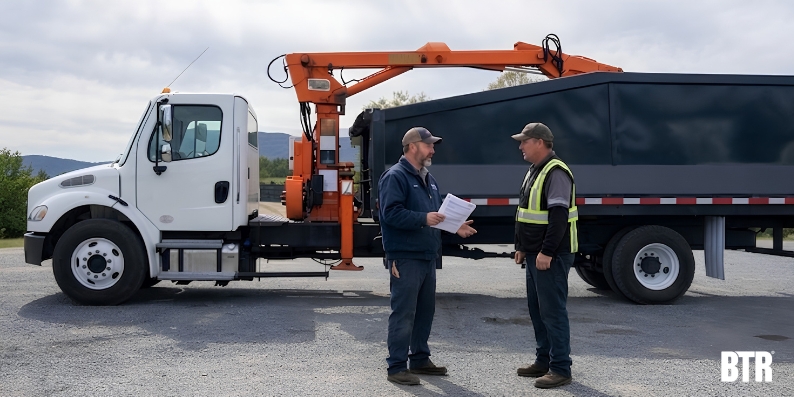
Before signing a rental agreement, take time to understand exactly what is included. Rental providers may offer different terms and support services, so asking questions in advance can help prevent unexpected costs or operational delays.
Topics to discuss include:
- Available short-term and long-term rental options
- Equipment availability and delivery timelines
- Maintenance responsibilities during the rental period
- Repair and replacement support if the truck experiences mechanical issues
- Pickup and return procedures
- Rent-to-purchase opportunities if ownership becomes a future goal
A clear understanding of the rental agreement helps ensure the equipment aligns with your project timeline, operational needs, and budget.
Step 5: Prepare Your Operators
Even experienced commercial drivers should become familiar with the specific grapple truck they will be operating. Proper preparation helps improve safety, reduce equipment wear, and keep projects running smoothly.
Before placing the truck into service:
- Review the manufacturer’s operating instructions.
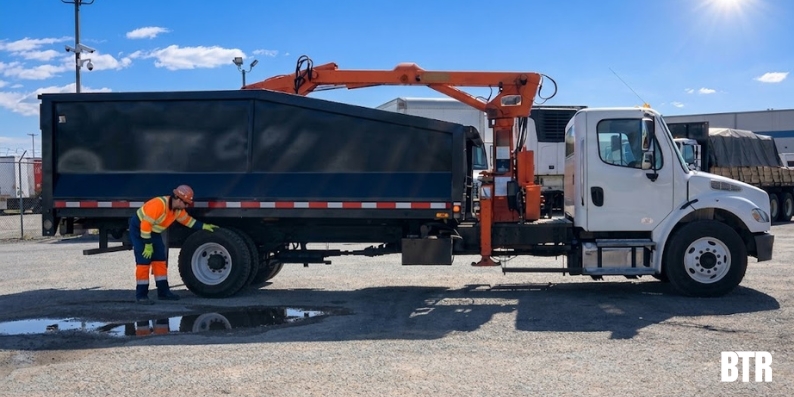
- Complete a pre-trip inspection before each shift.
- Inspect the boom, grapple, hydraulic system, and outriggers.
- Confirm all safety devices are functioning properly.
- Ensure operators understand site-specific traffic patterns and hazards.
- Follow company operating procedures during lifting and loading activities.
Taking time to familiarize operators with the equipment helps improve productivity while reducing the likelihood of accidents or equipment damage.
Why Renting Is Often Better Than Buying
Purchasing a grapple truck is a major investment that may not make sense for every organization. If your equipment needs vary throughout the year, renting offers greater flexibility while reducing the financial commitment of ownership.
Some of the biggest benefits of renting a grapple garbage truck include:
- Lower upfront costs compared to purchasing
- Immediate access to late-model equipment
- Flexible short-term and long-term rental programs
- Faster deployment than waiting for new equipment
- Support during truck-down situations
- Additional fleet capacity during seasonal demand
- Opportunity to transition into ownership through rent-to-purchase programs
For municipalities, contractors, and waste haulers, renting also helps preserve capital for fleet expansion, facility improvements, or other business priorities.
How Big Truck Rental Simplifies Grapple Truck Rentals
Big Truck Rental provides grapple truck rental solutions that help municipalities, contractors, and waste haulers respond quickly to changing operational demands. Whether you’re managing storm cleanup, bulky waste collection, vegetation removal, or temporary projects, flexible rental options make it easier to add specialized equipment when you need it most.
With short- or long-term truck rental support, Big Truck Rental helps customers reduce downtime while maintaining reliable service. Our late-model equipment and responsive support allow fleets to scale operations without the significant capital investment required to purchase new trucks.
Common Mistakes to Avoid When Renting a Grapple Truck
Renting a grapple truck is straightforward, but overlooking key details can result in equipment that doesn’t fully meet your operational needs.
Some common mistakes include:
- Choosing a truck without considering the lifting capacity
- Selecting a boom with insufficient reach for the project
- Renting for too short or too long a period
- Overlooking job site access limitations
- Not asking about maintenance or replacement support
- Skipping operator familiarization before deployment
Planning ahead helps ensure your rental supports productivity from the first day on the job.
Final Thoughts
Choosing the right grapple truck rental starts with understanding your project requirements and selecting equipment that matches the type of work you’ll be performing. Evaluating boom reach, lifting capacity, safety features, and rental terms before making a decision helps ensure the truck supports your operation efficiently.
Find the Right Grapple Truck Rental for Your Fleet
Big Truck Rental provides dependable grapple truck rental solutions that help municipalities, contractors, and waste haulers handle storm cleanup, bulky waste collection, vegetation removal, and other demanding projects.
Contact us today to explore grapple truck rental options and keep your projects moving with reliable equipment and flexible fleet solutions.
FAQs
What is a grapple truck used for?
A grapple truck is commonly used to collect bulky waste, storm debris, tree limbs, construction materials, logs, appliances, and other oversized items that cannot be handled by standard garbage trucks.
How much can a grapple truck lift?
Lifting capacity varies by model and configuration. The maximum lifting capacity depends on factors such as boom design, the hydraulic system, and the extent of boom extension during operation.
How long can I rent a grapple truck?
Rental periods vary based on your operational needs. Many providers offer short-term rentals for temporary projects, long-term rentals for ongoing operations, and rent-to-purchase options for businesses considering future ownership.
What should I look for in a grapple truck rental?
Consider the truck’s boom reach, grapple capacity, body size, hydraulic performance, safety features, maintenance support, and rental flexibility. Choosing equipment that matches your workload helps improve efficiency and reduce downtime.
Is renting a grapple truck better than buying?
For many organizations, renting provides greater flexibility, lower upfront costs, and faster access to equipment. It can be especially beneficial for seasonal projects, emergency response, temporary contracts, or truck-down situations where purchasing may not be the most practical solution.