Waste collection has evolved far beyond paper maps, manual scheduling, and phone calls. Today, modern waste and recycling operations rely on GPS tracking, real-time data, and fleet management systems to improve efficiency, reduce costs, and keep operations running smoothly. For companies managing garbage trucks and large-scale waste routes, visibility and control over fleet movement are no longer optional; it’s essential.
If your operation still relies on outdated route-planning methods, here are four main reasons tracking trash routes can significantly improve performance and efficiency.
1. Better Route Planning and Operational Efficiency
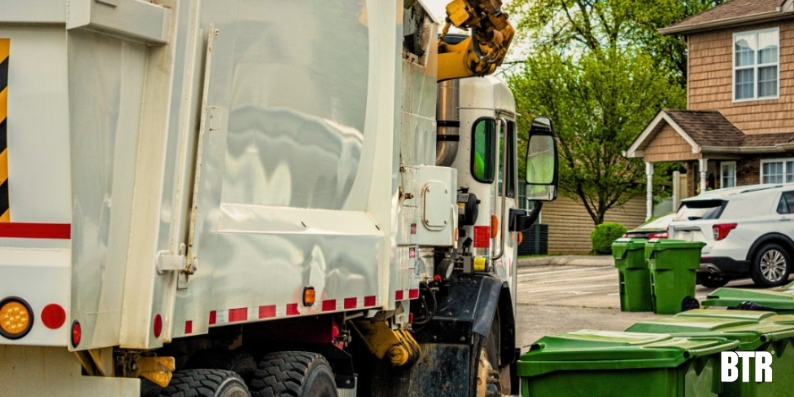
Modern GPS tracking systems give waste management operators real-time visibility into truck movement and road conditions. This allows for smarter route planning and faster response to disruptions.
With accurate tracking data, fleets can:
- Avoid traffic congestion and road hazards
- Adjust routes based on real-time conditions
- Identify the closest available garbage truck for urgent pickups
- Improve overall route efficiency across service areas
Over time, route data also reveals patterns in customer demand, traffic flow, and service density. This helps waste operators refine collection schedules and improve long-term planning for garbage truck deployment.
2. Improved Time Management and Scheduling
Time efficiency is critical in waste collection operations, where delays can impact entire service routes.
Tracking trash routes helps operators monitor:
- Route completion times
- Driver adherence to schedules
- Stop durations and idle time
- Overall fleet productivity
Modern systems may also integrate with vehicle diagnostics, allowing operators to track maintenance needs alongside route performance. This helps reduce unexpected downtime and keeps garbage trucks operating consistently across scheduled routes.
Better scheduling ultimately leads to more reliable service, improved fuel efficiency, and smoother daily operations.
3. Faster Resolution of Service Issues and Customer Disputes
One of the biggest challenges in waste collection is verifying service completion.
When customers report missed pickups, route tracking systems provide clear, data-backed proof of truck activity. Operators can quickly confirm:
- Whether a stop was completed
- Whether a location was included in the assigned route
- Whether a route deviation occurred due to operational conditions
This improves accountability and reduces time spent on dispute resolution. It also helps waste companies refine routes and improve service accuracy over time.
For large fleets of garbage trucks, this visibility is essential for maintaining customer trust and operational transparency.
4. Improved Driver Safety and Compliance
Waste collection vehicles operate in complex environments, including residential streets, tight urban routes, and high-traffic roads.
Route tracking supports safer operations by monitoring:
- Speed compliance
- Route adherence
- Harsh braking or turning behavior
- Unsafe driving patterns
By identifying risk behaviors early, fleet managers can provide targeted training and reduce the likelihood of accidents.
In addition, tracking systems help ensure that drivers follow optimized routes designed for safety and efficiency, especially important for large garbage trucks operating in dense service areas. These insights also help reinforce garbage truck safety practices by identifying risky driving behaviors before they lead to incidents.
Why Route Tracking Matters in Modern Waste Operations
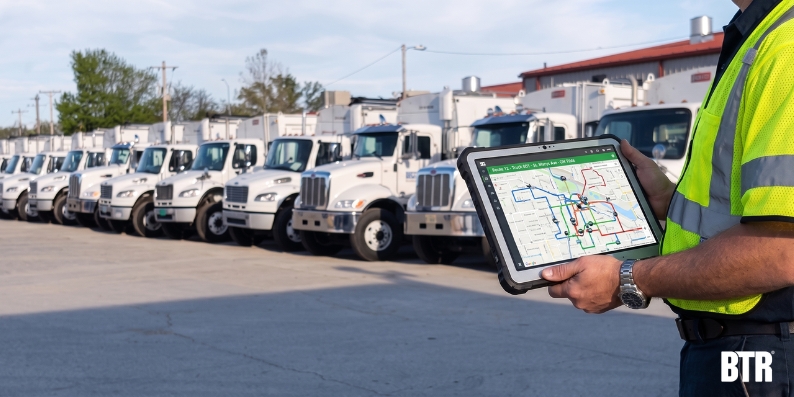
Beyond efficiency and safety, route tracking plays a major role in overall fleet performance.
For waste management companies, it helps:
- Increase garbage truck utilization
- Reduce fuel consumption
- Improve service reliability
- Optimize route density and scheduling
- Support better fleet decision-making
When combined with modern planning, route tracking becomes a key driver of operational success.
What to Look for in a Garbage Truck Route Tracking System
Not all GPS platforms are built for waste collection. Here’s what to prioritize when evaluating options:
- Real-time location updates — look for platforms that refresh every 30 seconds or less
- Route optimization built in — not just tracking, but active re-routing capability
- Onboard diagnostics integration — so maintenance alerts are tied to actual usage data, not just mileage
- Driver behavior monitoring — speed, braking, idle time, and PTO events
- Proof-of-service documentation — timestamped stop records that are exportable and audit-ready
- Waste-specific features — some platforms are built specifically for refuse fleets and support side-loaders, dense residential routes, and multi-depot operations
If you’re managing a mixed fleet or operating under a range of contract types, choosing a platform built for waste collection rather than adapting a generic logistics tool pays dividends quickly.
How Renting a Modern Garbage Truck Gives You a Head Start
If your current fleet predates modern telematics, the gap between your trucks and today’s tracking-capable vehicles is significant. Retrofitting older units is possible, but it is often costly and technically constrained by older hardware.
Renting a modern garbage truck gets you there faster. Big Truck Rental’s fleet is built with contemporary logistics and data-tracking technologies integrated at the factory. That means you can leverage route tracking benefits from day one without a retrofit project or a capital outlay on new units.
Whether you’re covering a short-term service gap, scaling a seasonal route, or replacing aging equipment while evaluating a full fleet upgrade, a rental can serve as your bridge to a more data-driven operation.
Final Thoughts
Tracking trash routes is no longer just a technological upgrade; it is a core part of modern waste management efficiency. With better visibility, improved scheduling, and safer operations, GPS-enabled route tracking helps garbage truck fleets operate more effectively while delivering more reliable service.
For waste operators looking to improve performance and reduce inefficiencies, route tracking remains one of the most impactful operational tools available today.
Improve Waste Collection Efficiency With Reliable Garbage Trucks
At Big Truck Rental, we help waste operators keep their routes running efficiently with dependable, late-model garbage trucks designed for real-world collection demands.
Contact us today to explore available garbage trucks and support your waste collection operations.

FAQs
What is garbage truck route tracking?
Route tracking uses GPS and fleet management software to monitor refuse trucks in real time, logging location, route progress, stop completion, driver behavior, and vehicle diagnostics. The data is accessible to fleet managers from a central dashboard and used for routing decisions, compliance, and operational reporting.
How much can route optimization actually reduce costs?
Route optimization software consistently reduces collection route distances by up to 30%, with corresponding reductions in fuel consumption and idle time. For fleets of five or more trucks operating daily routes, the annual savings can be substantial enough to offset the cost of the platform many times over.
Can route tracking data be used in customer disputes?
Yes. GPS-stamped stop records provide timestamped proof of where a truck was and when. This data can confirm a missed pickup or demonstrate that service was completed, resolving disputes quickly and protecting against false claims.
Does GPS tracking improve driver safety?
Significantly. Tracking systems monitor speeding, hard braking, rapid acceleration, and reverse alerts. Fleets that actively coach on this data see accident rates drop by 20–35% within six months of deployment.
Do garbage trucks need special tracking software?
Generic fleet software can work, but platforms built specifically for waste collection handle nuances that general tools miss, including side-loader route structures, hydraulic cycle monitoring, compactor wear tracking, and multi-depot planning. Waste-specific platforms generally deliver faster ROI for refuse fleets.