Key Takeaways:
- 2027 UCR fees have increased. Approved fees are higher than the 2026 rates, with the amount depending on the number of vehicles in your applicable fee bracket.
- CDL violation self-reporting has changed. FMCSA removed the federal requirement for CDL holders to report certain motor vehicle violations to their state of domicile.
- Medical certification records need attention. Electronic medical certification reporting is changing how states maintain CDL records, and the temporary paper-certificate exemption ended on October 11, 2026.
- Federal emissions rules have changed. EPA finalized the repeal of federal greenhouse gas standards for new highway vehicles and engines, while separate proposed changes affecting heavy-duty engines and diesel exhaust fluid (DEF) systems remain subject to further action.
- Fleet planning still matters. Independent haulers should review applicable requirements before purchasing trucks, expanding routes, or replacing equipment.
Running an independent hauling business means keeping trucks on the road, managing operating costs, and staying on top of changing regulations. As 2026 comes to a close, several federal regulatory updates are worth reviewing before planning for 2027.
These changes affect areas such as Unified Carrier Registration (UCR) fees, commercial driver’s license (CDL) records, medical certification, and heavy-duty truck emissions requirements. Some changes are already final, while others remain proposals that could affect future equipment decisions.
Knowing which requirements apply to your operation can help you prepare your budget, keep driver records current, and make informed fleet decisions. Here are the key trucking regulations for 2026 and updates to watch as you prepare for 2027.
Key 2026 Regulatory Changes Independent Haulers Should Know
1. 2027 UCR Registration Fees Have Increased
The Unified Carrier Registration (UCR) program requires eligible interstate motor carriers and certain other businesses to register annually and pay the applicable fee.
For the 2027 registration year, FMCSA approved an increase in UCR fees. The new schedule averages approximately 20% above the 2026 rates, although the actual increase depends on the applicable fee bracket.
Here are the 2026 and 2027 fees for motor carriers and freight forwarders:
| Number of vehicles | 2026 fee | 2027 fee |
| 0 to 2 | $46 | $55 |
| 3 to 5 | $138 | $167 |
| 6 to 20 | $276 | $333 |
| 21 to 100 | $963 | $1,163 |
| 101 to 1,000 | $4,592 | $5,548 |
| 1,001 or more | $44,836 | $54,165 |
Source: Official UCR fee schedule.
The updated fees apply to the 2027 registration year, which began accepting registrations on October 1, 2026. Eligible carriers should confirm their vehicle count and applicable fee bracket before registering.
What independent haulers should do: Include the updated UCR fee in your 2027 operating budget and confirm that your registration is complete before the new registration year begins. Keep in mind that UCR requirements depend on your operation, so not every business or vehicle faces the same obligations.
2. CDL Holders No Longer Need to Self-Report Certain Violations
FMCSA finalized a rule removing the self-reporting requirement for commercial driver’s license holders to report certain motor vehicle violations to their state of domicile.
The change follows the implementation of electronic exchanges of violation information between state driver licensing agencies. These exchanges reduce the need for drivers to report the same information separately.
However, this change does not eliminate the need to maintain accurate driver records or comply with other applicable reporting requirements.
What independent haulers should do: Review your driver qualification procedures and keep your records current. Motor carriers should continue monitoring driver qualifications, motor vehicle records, and other applicable safety requirements.
3. National Registry II Changes Medical Certification Records
FMCSA’s National Registry II (NRII) system changes how it transmits medical certification information to state driver licensing agencies.
Under the electronic process, medical examiners transmit certification information to FMCSA, which then makes the information available to participating state agencies. This reduces the need for many CDL holders to submit paper medical certificates themselves.
However, the transition requires attention. FMCSA’s temporary exemption allowing certain interstate CDL and commercial learner’s permit holders, as well as motor carriers, to rely on paper medical certificates for up to 60 days after issuance ended on October 11, 2026.
Alaska has not implemented NRII, so requirements may differ there. Drivers and carriers should confirm the applicable process with their state licensing agency.
What independent haulers should do: Check that each driver’s medical certification information is properly recorded and that the CDL record reflects the driver’s current status. Carriers should also continue to obtain and retain the required CDLIS motor vehicle record with medical certification information.
4. Federal Heavy-Duty Truck Emissions Regulations Have Changed
Emissions regulations are another area to monitor when planning future truck purchases.
In February 2026, the Environmental Protection Agency (EPA) finalized its rescission of the 2009 greenhouse gas endangerment finding and repealed subsequent federal greenhouse gas emission standards for new highway vehicles and engines.
This is a significant change to the federal greenhouse gas regulatory framework. However, it does not eliminate regulations covering traditional air pollutants, and independent haulers should not assume that every emissions-related requirement has disappeared.
EPA also proposed additional changes in July 2026 affecting certain 2027 and later heavy-duty engines. The proposal includes changes to regulatory useful-life periods, emissions-related warranties, compliance provisions, and requirements involving selective catalytic reduction systems that use diesel exhaust fluid (DEF).
These proposed changes are separate from EPA’s finalized greenhouse gas action. As of October 2026, the July proposal should not be treated as a final rule.
What independent haulers should do: Review applicable federal, state, and local requirements before purchasing or replacing trucks. Independent haulers can also consider how fuel efficiency and garbage truck emissions and pollution may affect their equipment choices and long-term fleet plans.
What These Changes Mean for Independent Haulers

These regulatory updates affect different parts of your operation, but they share one key point: staying prepared takes more than checking regulations once a year.
Review Registration and Compliance Costs
Higher UCR fees are a direct budget consideration for eligible carriers. Review your vehicle count, annual registrations, insurance, maintenance expenses, and other operating costs before finalizing your 2027 budget. Planning ahead can help you account for these expenses without overlooking other fleet needs.
Keep Driver Records Current
Changes to violation reporting and medical certification procedures do not remove the need for accurate driver records. Review CDL information, medical certification status, motor vehicle records, and other required documentation. Make sure your recordkeeping process reflects current FMCSA and state requirements.
Review Fleet Replacement Plans
Changes to emissions regulations may affect how manufacturers approach future truck models and related compliance requirements. However, base purchasing decisions on the requirements that apply to the vehicle and your operation.
Before committing to a replacement, consider the condition of your existing trucks, maintenance needs, expected service life, and plans for business growth.
How Independent Haulers Can Prepare for 2027
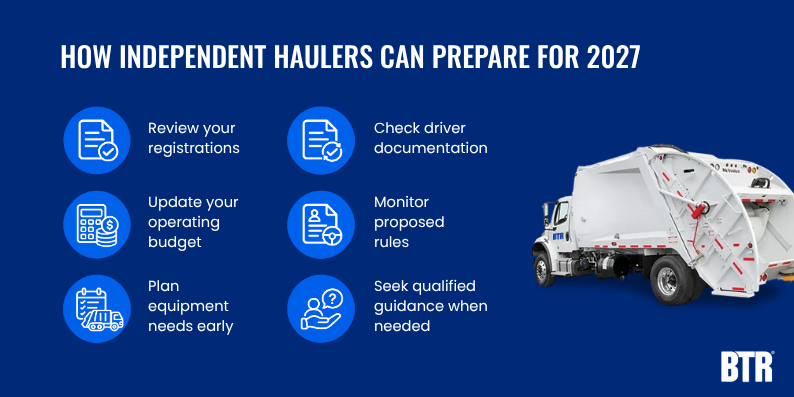
A few practical steps can help you enter the new year with a clearer picture of your compliance responsibilities and fleet needs.
- Review your registrations. Confirm that your UCR registration and other applicable records are current.
- Check driver documentation. Verify medical certification information, CDL records, and other required driver qualification documents.
- Update your operating budget. Account for the new UCR fees and other expected compliance expenses.
- Monitor proposed rules. Check official FMCSA and EPA updates before making decisions based on proposed regulatory changes.
- Plan equipment needs early. Review upcoming contracts, route demand, maintenance requirements, and the condition of your current trucks.
- Seek qualified guidance when needed. A compliance professional can clarify requirements based on your vehicle type, operating authority, or state.
Taking these steps now can help you identify potential issues early and make better-informed decisions about your operation.
How Flexible Fleet Solutions Can Support Regulatory Planning
Regulatory changes can influence when you need to replace a truck, add equipment, or adjust your fleet plans. However, compliance is only one part of the decision. Your available capital, workload, maintenance needs, and customer commitments also matter.
For some independent haulers, renting a garbage truck can provide additional capacity while a truck is being repaired or replaced. It can also help support a new contract, seasonal demand, or temporary growth without requiring an immediate long-term equipment purchase.
Purchasing may be the better option for trucks that will remain a core part of your fleet for years. Rent-to-purchase can provide another option for businesses evaluating whether a truck is a good fit for long-term ownership.
The right approach depends on your operating needs and financial plans. Comparing these options can help you decide how to maintain service while managing the cost and timing of equipment decisions.
How Big Truck Rental Supports Independent Haulers
At Big Truck Rental, we understand that independent haulers need to balance reliable service, operating costs, and growth plans.
Our fleet solutions include rental options, rent-to-purchase opportunities, and trucks available for purchase. These options can help independent haulers address changing capacity needs, supplement their existing fleets, or evaluate equipment for longer-term use.
Whether you’re preparing for a truck replacement, covering unexpected downtime, or expanding to support a new contract, the right fleet solution can help you keep your operation moving while you plan your next steps. BTR’s Independent Hauler Hub also covers common operational challenges and fleet growth considerations for independent waste haulers.
Final Thoughts
The 2026 regulatory changes independent haulers need to know include updated UCR registration fees, changes to CDL violation self-reporting, medical certification recordkeeping, and changes to federal greenhouse gas standards for new vehicles and engines. Additional proposed rules may also affect future heavy-duty engine requirements.
The most important step is understanding which requirements apply to your operation and tracking changes as they take effect. Review your records, plan for 2027 registration costs, and check official sources before making decisions based on proposed rules.
Prepare Your Fleet for 2027
Planning for a new year can bring questions about equipment, capacity, and long-term fleet costs. Big Truck Rental offers flexible truck solutions to help independent haulers respond to changing business needs.
Request a quote to discuss rental, rent-to-purchase, or available truck options for your operation.

FAQs
What trucking regulations are changing in 2026?
Key changes include updates to CDL violation reporting, electronic medical certification, and federal heavy-duty truck emissions rules. Independent haulers should also review upcoming 2027 Unified Carrier Registration (UCR) fees.
How much will UCR registration fees increase in 2027?
UCR fees are scheduled to increase for 2027, with the amount depending on the number of commercial motor vehicles in a carrier’s fleet. Haulers should check the official UCR fee schedule before registering.
Do CDL holders still need to carry paper medical certificates?
Generally, CDL holders may no longer need to submit paper medical certificates to their state when medical certification information is transmitted electronically. Drivers should confirm their records are updated and follow any applicable requirements.
How do the 2026 EPA changes affect independent haulers?
Changes to federal greenhouse gas regulations may affect future truck purchasing and replacement plans. Other emissions requirements may still apply, so haulers should verify which rules cover their vehicles and operations.
How can independent haulers prepare for trucking regulations in 2027?
Review registration deadlines and fees, check driver qualification and medical records, monitor proposed regulations, and plan for maintenance or truck replacements. Rental and rent-to-purchase options may also help manage changing fleet needs