Key Takeaways
- Side loader lift capacity varies by manufacturer, hydraulic arm, and truck configuration.
- Many systems lift several hundred pounds, while certain heavy-duty models can handle up to 2,000 pounds.
- Container size, contents, and compatibility affect whether a lift system can safely handle a load.
- Hydraulic arm capacity and overall truck payload capacity measure two different things.
- Manufacturer specifications are the best source for a truck’s rated lifting limits.
- Choosing the right capacity helps fleets match equipment to collection routes and container requirements.
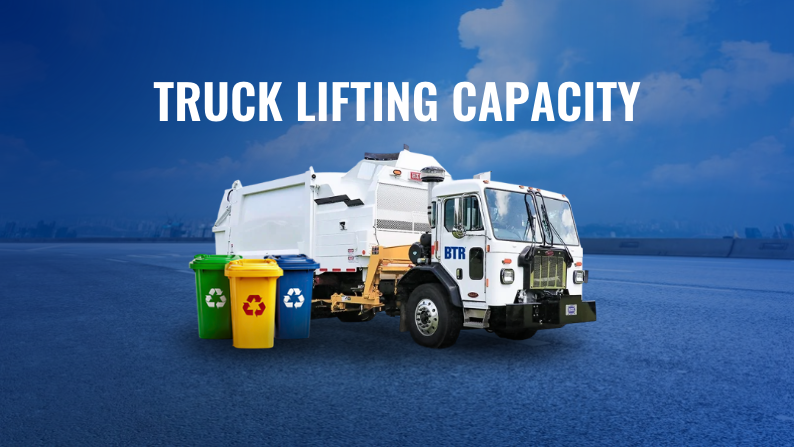
A side loader garbage truck uses a hydraulic arm to lift and empty waste containers into the truck body. Its lifting capacity determines how much weight the arm can raise during collection, making it an important specification for municipalities and waste hauling companies.
The amount a side loader can lift depends on its arm assembly, hydraulic system, container compatibility, and overall configuration. Some systems are rated for several hundred pounds, while certain heavy-duty models can lift as much as 2,000 pounds.
It’s also important to distinguish lifting capacity from payload capacity. The first describes what the arm can raise during collection. The second describes how much waste the truck can carry. Knowing the difference helps fleet managers choose equipment that fits their routes and operating requirements.
How Much Can a Side Loader Garbage Truck Lift?
A side loader garbage truck can typically lift several hundred pounds per container, although the exact rating depends on the model and lifting system. Some standard systems have ratings around 500 to 800 pounds, while heavier-duty designs can handle more. Certain specialized systems offer lift capacities of up to 2,000 pounds.
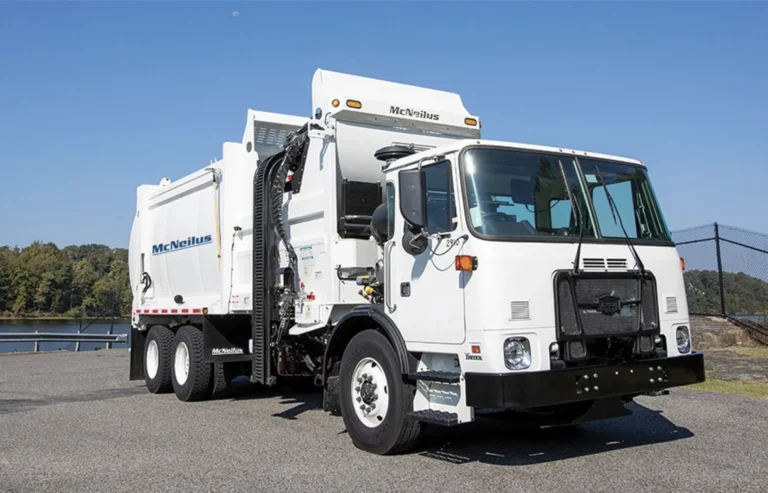
For example, published specifications for the McNeilus AutoReach automated side loader list an arm lift capacity of up to 2,000 pounds. Other side loader systems have lower ratings, so don’t treat that figure as a standard capacity for every truck.
When comparing side loader garbage truck manufacturers, review their published lifting ratings, compatible container types, and available configurations. These details help you determine whether a model can handle your operation’s loads and collection requirements.
Estimated Side Loader Lift Capacity
| Application or System | Approximate Lift Capacity |
| Standard residential cart systems | 300–800 lbs. |
| Heavier-duty side loader systems | 500–1,600 lbs. |
| Specialized high-capacity systems | Up to 2,000 lbs. |
These figures are general estimates for comparison, not universal equipment ratings. Actual capacity depends on the specific truck, lift assembly, container, and manufacturer specifications.
A truck’s maximum rated capacity also does not mean every container can be lifted safely at that weight. The container must be compatible with the lifting mechanism, and its total loaded weight must remain within the equipment’s limits.
Before selecting a truck, review its specifications alongside the size and weight of the containers used on your routes.
What Affects Side Loader Lifting Capacity?
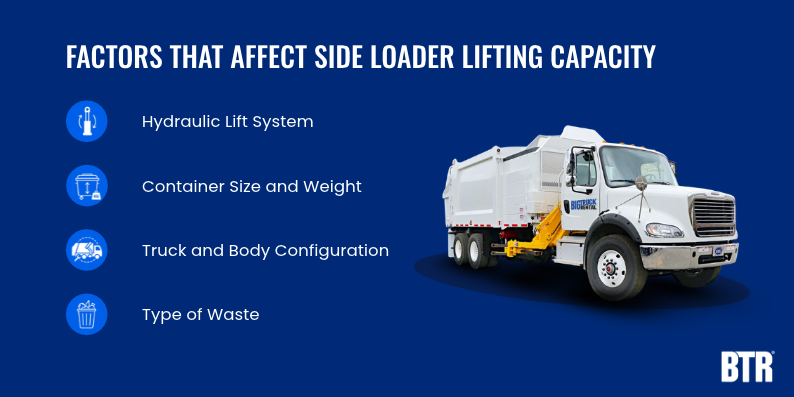
Several components determine how much weight a side loader garbage truck can raise. Looking at the full lifting system is more useful than relying on a single capacity figure.
1. Hydraulic Lift System
The hydraulic system supplies the force needed to move the arm and raise the container. Its performance depends on the hydraulic pump, cylinders, operating pressure, arm geometry, and other components working together.
Some systems operate at hydraulic pressures around 2,000 to 3,000 PSI, but this range doesn’t apply to every side loader. Pressure alone also does not determine lifting capacity. The design and ratings of the complete system matter.
When comparing equipment, check the manufacturer’s stated lift capacity rather than using hydraulic pressure as a substitute for a rated lifting limit.
2. Container Size and Weight
The container’s size, loaded weight, and compatibility with the lifting mechanism all affect collection performance.
A larger container can hold more waste, but its total weight may exceed what a particular arm is rated to lift. The empty container’s weight also adds to the load the arm must raise.
Before putting a side loader into service, verify that its lifter is compatible with the containers used on the route. Check the rated capacity for the specific configuration rather than assuming that every container of the same volume weighs the same.
3. Truck and Body Configuration
The chassis, refuse body, arm assembly, and hydraulic components all contribute to the truck’s overall design and operating limits.
Manufacturers may offer different body sizes, arm designs, and lifting configurations for residential or commercial collection. These differences can affect both the weight the arm can raise and the amount of waste the truck can carry.
When reviewing side loader specifications, compare rated lift capacity, body capacity, chassis configuration, and compatible container sizes. These details help you determine whether the equipment matches your collection routes and expected workload.
4. Type of Waste
The material inside a container can change its weight significantly. A cart filled with light packaging may weigh much less than one holding wet organic waste, dense debris, or other heavy materials.
For example, two containers of the same size may have very different loaded weights. This means container volume alone cannot confirm whether a lift system can handle the load.
Operators should follow the truck’s rated limits and the collection company’s procedures for overloaded or unsuitable containers. If a container appears too heavy or cannot be lifted normally, they should not force the mechanism to complete the lift.
Lift Capacity vs. Overall Payload Capacity
Lift capacity and payload capacity describe different limits, and both matter when choosing a side loader garbage truck.
| Specification | What it means |
| Lift capacity | The weight the hydraulic lifting system is rated to raise under specified conditions. |
| Payload capacity | The amount of waste and other cargo the truck can carry within its applicable weight limits. |
| Gross vehicle weight rating (GVWR) | The manufacturer’s maximum permitted total operating weight of the fully loaded vehicle. |
A side loader might have an arm capable of lifting a heavy container but still need to stop collecting once the truck’s body reaches its allowable payload. The arm’s rating does not increase the truck’s carrying capacity.
What About Total Truck Weight?
A truck’s gross vehicle weight rating (GVWR) is the maximum permitted operating weight specified by the chassis manufacturer. It includes the vehicle, body, equipment, occupants, fuel, and cargo. Axle ratings and applicable road regulations may also affect the actual legal operating limit.
Some heavy-duty refuse trucks may have gross vehicle weight ratings in the tens of thousands of pounds. However, there is no single GVWR or payload figure that applies to every side loader. Body size, chassis, axle configuration, equipment weight, and local requirements all affect the final limits.
To estimate usable payload, fleet managers need to compare the truck’s applicable weight ratings with its actual operating weight. They should not assume that a truck can carry 8 to 14 tons of waste or that every model has a GVWR of 50,000 to 66,000 pounds without verifying the specific configuration.
In practice, the key is to check three separate figures:
- Arm lift capacity: How much weight the lifting system can raise.
- Payload capacity: How much waste the truck can carry.
- GVWR and axle ratings: The maximum vehicle and axle weights that must not be exceeded.
Keeping these limits separate helps prevent selecting or operating equipment based on the wrong capacity figure.
Why Lifting Capacity Matters for Waste Collection
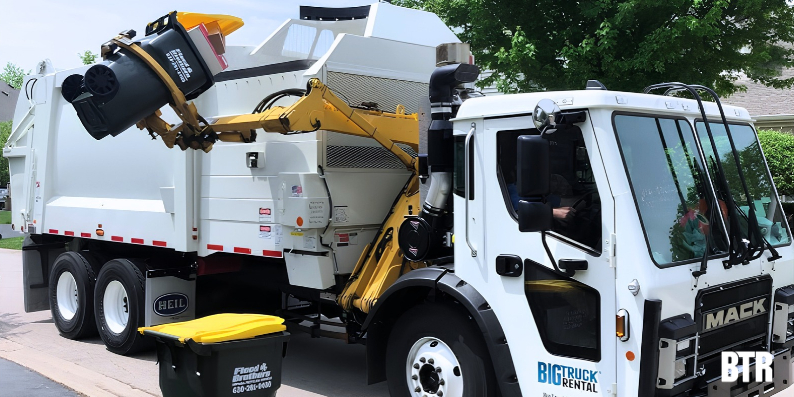
Choosing a side loader with the right lifting capacity helps waste haulers match equipment to the containers, materials, and conditions on their routes.
The right capacity can support several operational goals:
- Match trucks to containers. Confirm that the lifting system can handle the container types and loaded weights used on the route.
- Support automated collection. An appropriately configured automated side loader can collect compatible containers without requiring the driver to lift and empty each one manually.
- Reduce equipment strain. Staying within the rated limits helps avoid putting unnecessary stress on the lifting mechanism and hydraulic components.
- Plan collection routes. Understanding container weights and payload limits helps fleet managers estimate when a truck may need to unload.
- Select suitable equipment. Comparing lift capacity, body capacity, and route requirements helps prevent choosing a truck that is either unsuitable or unnecessarily heavy-duty for the work.
These considerations matter most when adding routes, changing container sizes, or replacing older equipment. Evaluate the truck against the actual collection workload, not capacity figures alone.
How Big Truck Rental Supports Side Loader Operations
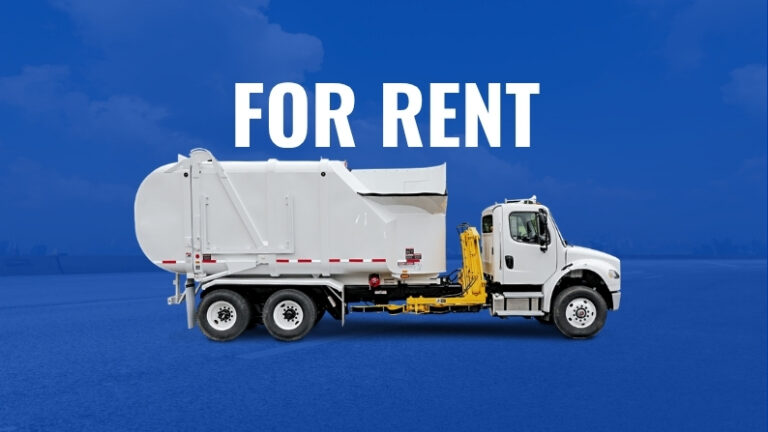
Big Truck Rental provides side loader garbage trucks for waste collection operations with different route requirements and fleet needs. Selecting the right equipment starts with understanding the containers being collected, the expected waste load, and the truck’s rated lifting and payload capacities.
Renting can help waste haulers and municipalities add collection capacity, cover seasonal demand, replace an out-of-service vehicle, or support new routes without immediately committing to a long-term purchase.
The appropriate rental depends on the application, equipment availability, and required configuration. Before choosing a truck, confirm that its lifting system and body capacity suit your containers and collection requirements.
For operations with changing fleet needs, flexible garbage truck rental programs can provide another option to consider when planning equipment requirements.
Final Thoughts
A side loader garbage truck’s lifting capacity depends on its hydraulic system, arm design, container compatibility, and overall configuration. Many systems handle several hundred pounds, while some heavy-duty models are rated to lift as much as 2,000 pounds.
The most important step is to verify the rating for the specific truck rather than treating a general estimate as a guarantee. Lift capacity should also be considered separately from payload capacity and the truck’s GVWR.
By matching equipment specifications to container weights and route demands, waste collection companies can make more informed fleet decisions and select trucks that suit their day-to-day operations.
Find the Right Side Loader for Your Operation
Big Truck Rental can help you explore side loader rental options for your waste collection routes and fleet requirements. Whether you need additional capacity, a replacement vehicle, or equipment for a new route, the right configuration starts with understanding your operation.
Contact Big Truck Rental to discuss available side loader options.

FAQs
How much weight can a side loader garbage truck lift?
Capacity varies by model and lifting system. Some systems are rated for several hundred pounds, while specialized models can lift up to 2,000 pounds. Always check the manufacturer’s rating for the specific truck.
What is the difference between side loader lift capacity and payload capacity?
Lift capacity is the maximum weight the hydraulic arm is rated to raise. Payload capacity is the amount of waste the truck can carry within its applicable weight limits.
Can an automated side loader lift 2,000 pounds?
Some models can. For example, the McNeilus AutoReach automated side loader lists an arm lift capacity of up to 2,000 pounds, but other models have different ratings.
What affects a side loader garbage truck’s lifting capacity?
The hydraulic system, arm design, container compatibility, and truck configuration all affect lifting capacity. The loaded container must remain within the rated limit of the specific lifting system.
How do I find the lifting capacity of a side loader garbage truck?
Check the manufacturer’s specification sheet for the exact model and configuration. If the documentation does not clearly state the rated lift capacity, ask the manufacturer or equipment provider to confirm it before selecting the truck for your operation.