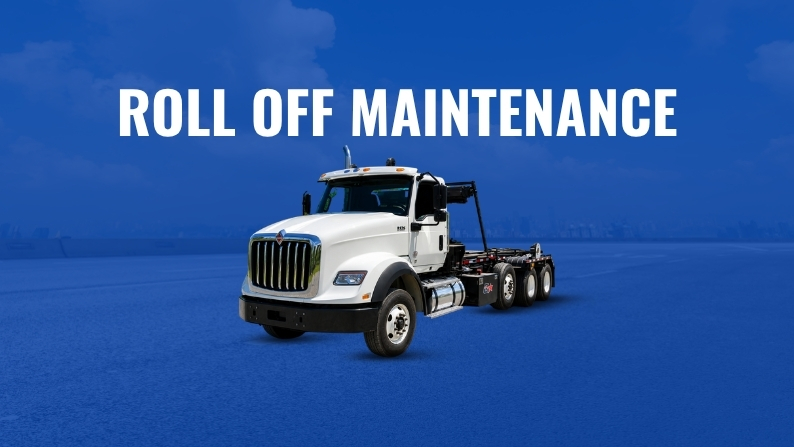
Roll-off trucks work in demanding environments every day, transporting heavy containers across construction sites, demolition projects, industrial facilities, and waste operations. Keeping these trucks in good condition is essential for maintaining productivity, reducing downtime, and extending equipment life.
A proactive roll-off truck maintenance program helps identify small issues before they become costly repairs. Regular inspections, preventive maintenance, and proper operator practices can improve reliability while helping fleets stay on schedule.
This guide covers the maintenance practices every fleet should follow.
Why Preventive Maintenance Matters
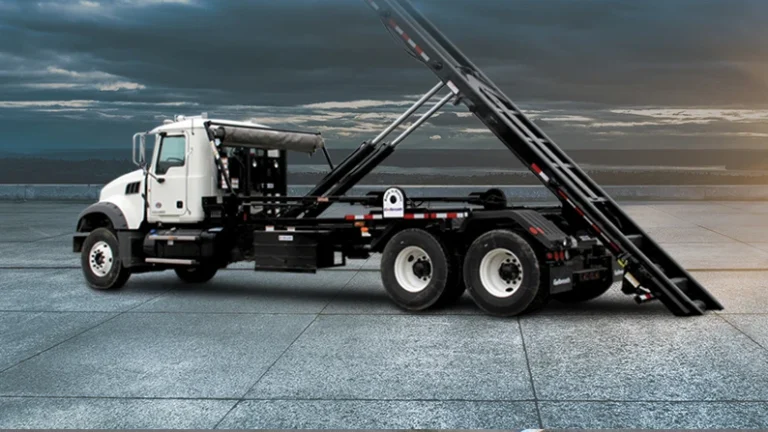
Unlike front loaders or rear loaders, roll-off trucks don’t use compacting systems, but they still rely on complex hydraulic and hoist components that require regular attention.
Routine maintenance helps:
- Reduce unexpected breakdowns
- Improve equipment reliability
- Extend component life
- Lower repair costs
- Improve jobsite safety
- Maximize fleet uptime
The environments where roll-off trucks handle heavy debris can be tough on equipment, making regular inspections and preventive maintenance essential for dependable performance.
1. Perform Daily Walkaround Inspections
A thorough inspection before each shift is one of the easiest ways to identify potential problems.
Inspect the truck for:
- Hydraulic fluid leaks
- Air leaks
- Loose bolts or fasteners
- Damaged hydraulic hoses
- Worn cables or hooks
- Tire condition and inflation
- Lights and reflectors
- Safety equipment
Small issues discovered early are usually much easier and less expensive to repair.
2. Keep the Truck Clean
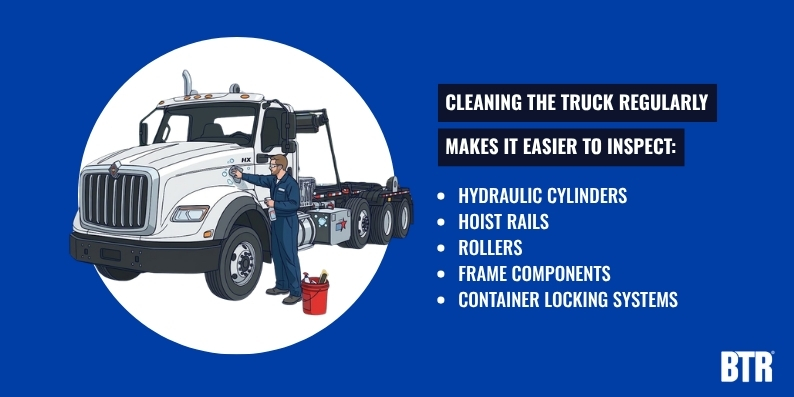
Construction debris, mud, concrete dust, and waste material can hide developing problems.
Cleaning the truck regularly makes it easier to inspect:
- Hydraulic cylinders
- Hoist rails
- Rollers
- Frame components
- Container locking systems
Removing dirt and debris also helps reduce corrosion and allows maintenance technicians to identify wear more easily.
3. Monitor Hydraulic Fluid and Lubrication
The hydraulic system performs most of the heavy lifting on a roll-off truck.
Regularly inspect:
- Hydraulic fluid level
- Fluid condition
- Hydraulic fittings
- Cylinder seals
- Hose connections
Lubricate moving components according to the manufacturer’s maintenance schedule, including:
- Hoist pivots
- Rollers
- Hinges
- Container locking mechanisms
Maintenance intervals can vary depending on the truck’s design and hoist configuration. Reviewing your roll-off truck specifications can help you follow the manufacturer’s recommended service schedule.
4. Inspect the Hoist System
The hoist system experiences significant stress during daily loading and unloading.
Inspect components such as:
- Hoist rails
- Rollers
- Cables (if equipped)
- Hooks
- Container locks
- Mounting hardware
Look for excessive wear, cracks, loose hardware, or signs of metal fatigue. Addressing these issues early helps avoid expensive repairs and unexpected downtime. Proper inspections should always be paired with safe operating practices.
5. Check Tires and Suspension
Roll-off trucks routinely carry heavy loads over uneven terrain. Regularly inspect:
- Tire pressure
- Tread wear
- Sidewall damage
- Wheel fasteners
- Suspension components
Proper tire maintenance improves stability, handling, and fuel efficiency while reducing the risk of roadside breakdowns.
6. Follow the Manufacturer’s Maintenance Schedule
Service intervals may vary by manufacturer and model. Understanding the differences between leading roll-off truck manufacturers can help you locate the correct maintenance recommendations for your equipment.
Following these maintenance schedules helps maximize equipment reliability while reducing long-term operating costs.
7. Train Operators to Identify Problems Early
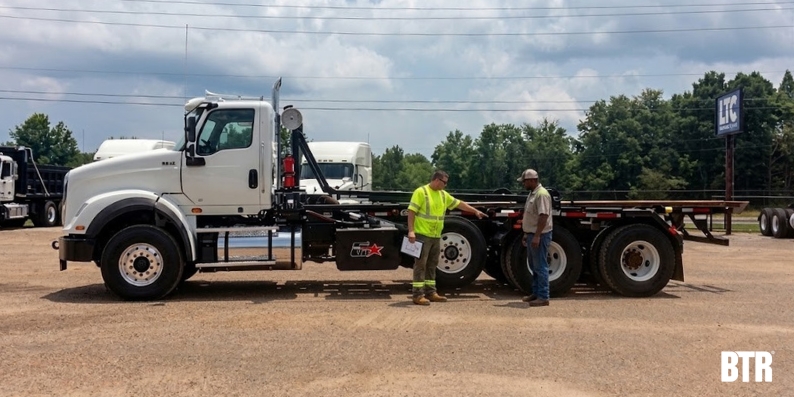
Operators are often the first to notice changes in equipment performance.
Encourage drivers to report issues such as:
- Unusual hydraulic noises
- Slower lifting speeds
- Fluid leaks
- Warning lights
- Difficulty loading containers
- Unusual vibrations
Early reporting allows maintenance teams to resolve problems before they become major failures.
When Renting Makes Sense During Repairs
Even with an excellent maintenance program, trucks occasionally require major repairs or scheduled downtime.
Many fleets use roll-off truck rentals to:
- Replace trucks undergoing repairs
- Maintain customer service levels
- Support seasonal demand
- Handle unexpected equipment failures
- Expand fleet capacity for temporary projects
If a truck requires extensive repairs, many fleets rely on the benefits of renting a roll-off truck to maintain productivity while their equipment is out of service.
How Big Truck Rental Supports Fleet Uptime
Big Truck Rental provides dependable roll-off trucks for rent that help waste companies, contractors, municipalities, and industrial operations maintain productivity.
Whether you need equipment during scheduled maintenance, emergency repairs, or fleet expansion, our flexible rental solutions help reduce downtime while keeping operations running efficiently.
If you’re considering temporary replacement equipment, our renting guide for a roll-off truck explains what to look for before choosing a rental.
Final Thoughts
A consistent roll-off truck maintenance program is one of the best ways to maximize equipment life, improve reliability, and reduce operating costs. Daily inspections, proper lubrication, hydraulic system checks, and operator involvement all play an important role in preventing unexpected downtime. When repairs do take equipment out of service, having access to dependable rental trucks can help keep your fleet moving without interrupting operations.
Keep Your Fleet Working Without Interruption
Whether you’re planning scheduled maintenance or responding to unexpected repairs, Big Truck Rental offers flexible roll-off truck rental solutions that help keep your operation running.
Contact us today to learn more about our short-term, long-term, and rent-to-purchase rental programs.
FAQs
How often should a roll-off truck be inspected?
A walkaround inspection should be completed before every shift, with scheduled preventive maintenance performed according to the manufacturer’s recommendations.
What should be included in roll-off truck maintenance?
Routine maintenance typically includes inspecting hydraulic systems, lubricating moving parts, checking tires, inspecting the hoist system, monitoring fluid levels, and performing regular cleaning.
Why is hydraulic maintenance important on a roll-off truck?
Hydraulic systems power the hoist mechanism. Keeping hydraulic fluid clean and maintaining proper fluid levels helps prevent excessive wear, improve lifting performance, and reduce the risk of component failure.
How can operators help prevent costly repairs?
Operators can identify leaks, unusual noises, warning lights, or changes in truck performance early, allowing maintenance teams to address problems before they become major repairs.
What happens if a roll-off truck needs major repairs?
Many fleets temporarily rent replacement equipment to avoid service interruptions while their trucks undergo maintenance or repairs.