Key Takeaways
- Grapple trucks are designed for bulky waste removal. Their hydraulic arms allow operators to lift and load branches, logs, furniture, and other large debris.
- Common grapple truck applications include storm cleanup, brush removal, bulky waste collection, construction debris hauling, and illegal dumping cleanup.
- Grapple trucks can improve collection efficiency by reducing manual lifting and making it easier to handle large or irregularly shaped materials.
- Choosing the right grapple truck depends on debris type, lifting capacity, boom reach, truck body configuration, and expected workload.
- Grapple truck rentals provide flexible access to equipment for municipalities and contractors managing seasonal demand, emergency cleanup, and temporary projects.
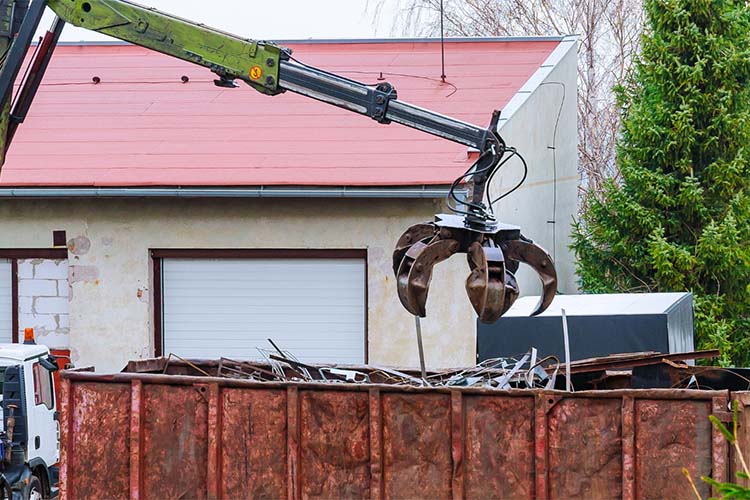
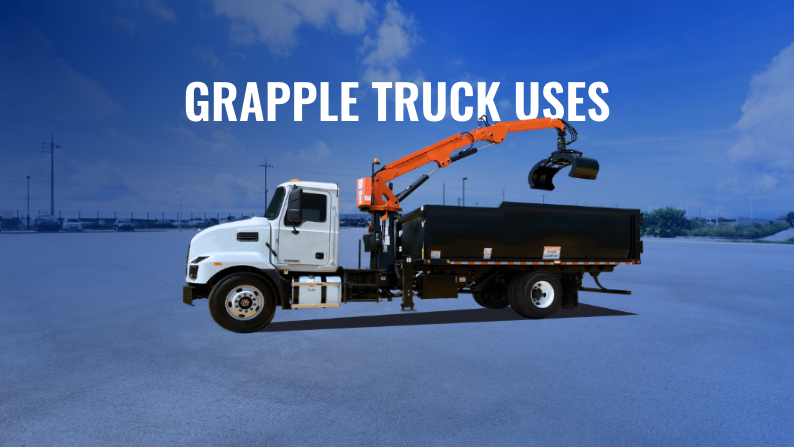
Grapple trucks are specialized vehicles used to collect and transport bulky waste materials that are difficult to handle with conventional garbage trucks. Equipped with a hydraulic boom and grapple attachment, these trucks can lift large objects, branches, logs, and other debris directly into a collection body or hauling vehicle.
Municipalities, waste management companies, landscaping businesses, and construction contractors use grapple trucks for different cleanup operations. Their mechanical loading capabilities make them useful for handling materials that may require additional equipment or significant manual labor.
Understanding what grapple trucks are used for can help organizations determine when this equipment fits their collection and hauling needs.
What Is a Grapple Truck and How Does It Work?
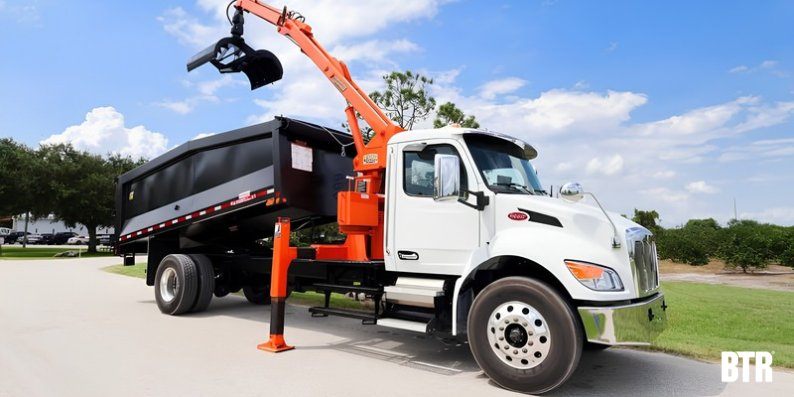
A grapple truck is a specialized work vehicle equipped with a hydraulic boom and a gripping attachment called a grapple. The attachment uses mechanical arms or jaws to grab, lift, and move bulky materials into a truck body, trailer, or separate hauling vehicle, depending on the truck’s configuration.
The evolution of grapple garbage trucks reflects the growing use of hydraulic lifting equipment to handle heavy and irregularly shaped waste.
The main components of a grapple truck include:
- Hydraulic boom: An extendable arm that allows the operator to reach and lift materials from different positions.
- Grapple attachment: A set of gripping jaws designed to pick up and hold debris.
- Operator controls: Controls used to position the boom and operate the grapple.
- Collection body: The area where collected materials are placed for transportation. Some configurations load a separate hauling vehicle instead.
During operation, the driver positions the truck near the debris, uses the hydraulic controls to extend the boom, and grips the material with the grapple. The boom then lifts and moves the material into the designated hauling area.
Unlike conventional garbage trucks, which are generally designed for routine residential and commercial waste collection, grapple trucks handle large, irregularly shaped materials that may not fit into standard collection containers.
Common Uses of Grapple Trucks
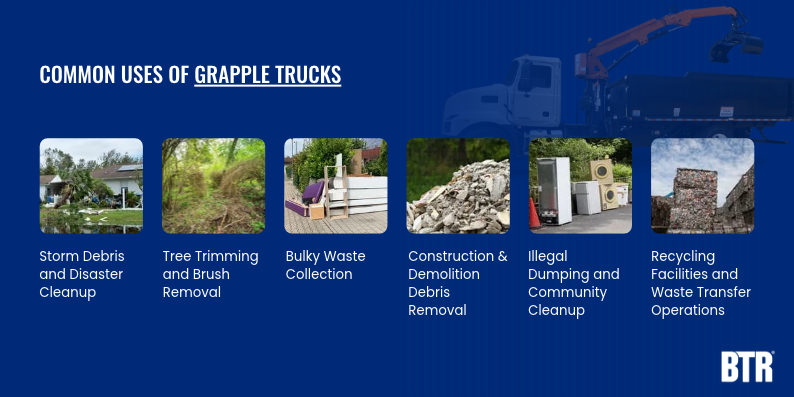
Grapple trucks support several waste collection and cleanup operations. Their ability to mechanically lift bulky materials makes them useful for municipalities, contractors, and other organizations that regularly handle large debris.
1. Storm Debris and Disaster Cleanup
Severe storms, hurricanes, and other natural disasters can leave large amounts of debris across streets, neighborhoods, and public spaces. Fallen tree limbs, branches, and other bulky waste materials can block roads and create safety concerns.
Grapple trucks help cleanup crews collect and load these materials without relying entirely on manual handling. Their hydraulic booms can reach debris piles and move large branches into hauling vehicles.
Municipalities may use grapple trucks during emergency cleanup operations to help clear affected areas and restore access to public roads and spaces.
2. Tree Trimming and Brush Removal
Tree maintenance and landscaping activities generate branches, logs, brush, and other vegetation that require collection and disposal. Grapple trucks can pick up these materials from roadside maintenance projects, public parks, and residential yard waste programs.
Municipalities may also use them for seasonal brush collection, particularly when residents place large amounts of yard waste along designated collection areas.
The hydraulic grapple reduces the need for workers to manually lift heavy or oversized vegetation, making collection more manageable for cleanup crews.
3. Bulky Waste Collection
Standard garbage trucks are generally designed for bagged trash and containerized waste. Large household items, such as discarded furniture and other oversized materials, may require a different collection method.
Grapple trucks can lift and load these items during municipal bulk pickup programs and neighborhood cleanup projects. Their mechanical arms help operators collect bulky materials that are difficult to move by hand or accommodate in conventional garbage trucks.
This makes them useful for scheduled bulk collection and special community cleanup events.
4. Construction and Demolition Debris Removal
Construction, renovation, and demolition projects can produce large amounts of wood, broken materials, and other bulky debris. Grapple trucks can help load and transport suitable materials from these sites.
Contractors may use them for general site cleanup and debris removal when materials and job conditions match the truck’s equipment.
However, not all construction waste is suitable for grapple trucks. Material weight, size, handling requirements, and truck configuration should be considered before selecting equipment for a particular project.
5. Illegal Dumping and Community Cleanup
Illegal dumping can leave large piles of waste along roadsides, vacant lots, and other public areas. These materials may include discarded furniture, branches, and oversized debris that conventional collection vehicles cannot easily handle.
Municipal public works departments can use grapple trucks to remove these materials during cleanup operations. The hydraulic boom allows operators to pick up large items and load them for transport.
Grapple trucks can also support organized community cleanup programs that target neglected public spaces and areas with recurring dumping problems.
6. Recycling Facilities and Waste Transfer Operations
Some grapple truck configurations are suitable for moving bulky recyclable materials, scrap, and other debris at collection and processing sites.
Operators can use the hydraulic attachment to load selected materials into hauling vehicles for transportation to recycling facilities or transfer stations.
Mechanical material handling can reduce the need for manual lifting and help facilities move large items more efficiently. The appropriate grapple attachment and truck configuration will depend on the type, size, and weight of the materials being handled.
What Are the Benefits of Using Grapple Trucks?
Grapple trucks offer several practical advantages for organizations that regularly collect bulky waste and debris.
Faster Collection of Bulky Debris
Hydraulic booms and grapple attachments allow operators to pick up large materials mechanically. This can reduce the time crews spend collecting oversized debris compared with relying entirely on manual loading.
Reduced Manual Labor and Physical Strain
Workers may need to lift heavy branches, furniture, and other bulky materials during cleanup operations. Grapple trucks handle much of this lifting mechanically, reducing manual handling and certain physical strain and injury risks.
Versatility Across Different Cleanup Operations
Grapple trucks can support storm cleanup, brush removal, bulky waste collection, and suitable construction-related projects. Different types of grapple trucks and attachments let organizations choose equipment based on their material-handling requirements.
Improved Operational Efficiency
Some grapple trucks combine debris collection and hauling in one vehicle, depending on their configuration. This can reduce the need for separate loading equipment and support vehicles. Selecting the right truck for the job can also help crews manage collection tasks more effectively.
Grapple Trucks vs. Traditional Garbage Trucks
Although both vehicle types support waste collection, grapple trucks and traditional garbage trucks are built for different applications.
| Comparison Factor | Grapple Trucks | Traditional Garbage Trucks |
| Primary use | Bulky debris and oversized waste | Routine residential and commercial waste |
| Loading method | Hydraulic boom and grapple | Manual, container, or automated loading |
| Common materials | Branches, logs, furniture, large debris | Bagged trash and containerized waste |
| Waste compaction | Generally not designed for compaction | Commonly equipped with compactors |
| Typical applications | Storm cleanup, brush and bulk collection | Regular municipal trash collection |
Grapple trucks are better suited for collecting large, irregularly shaped materials that may be difficult to load manually or through standard garbage collection systems.
However, they generally supplement conventional garbage trucks rather than replace them. Municipalities typically need different vehicle types to handle routine trash collection and specialized bulky waste operations.
How to Choose the Right Grapple Truck for Your Operation
Selecting a grapple truck requires comparing grapple truck models based on the materials, work environment, and collection requirements. The right configuration can help ensure the equipment is suitable for the job.
Type and Volume of Debris
Consider the materials the truck will collect, such as brush, storm debris, bulky household waste, or construction materials. Their size, weight, and expected volume will affect the type of grapple and hauling capacity required.
Grapple Reach and Lifting Capacity
The hydraulic boom must have enough reach and lifting capacity for the intended work. Consider the distance between the truck and collection area, available operating space, and weight limitations to support safe grapple truck operation.
Truck Body Capacity and Configuration
Truck body capacity affects how much material can be transported before unloading. Organizations should also determine whether they need a self-contained grapple truck or a configuration that loads a separate hauling vehicle.
Frequency of Use and Fleet Requirements
Consider whether the truck is needed for regular municipal collection or a temporary cleanup project. Evaluate maintenance requirements, operator qualifications, vehicle availability, and whether renting or purchasing makes more sense for the expected usage.
When Should Municipalities and Contractors Rent a Grapple Truck?
Renting a grapple truck can help organizations access specialized equipment without committing to an immediate purchase. It can be especially useful in situations such as:
- Storm cleanup and emergency response: Add equipment for large debris removal operations following severe weather.
- Seasonal brush collection: Increase fleet capacity during periods when vegetation waste is higher.
- Special cleanup projects: Access grapple trucks for temporary municipal or construction cleanup requirements.
- Equipment shortages: Maintain operations when existing grapple trucks are undergoing repairs or maintenance.
- Fleet flexibility: Use short-term or longer-term rental arrangements to manage changing equipment needs.
Before renting, organizations should confirm that the truck’s grapple attachment, lifting capacity, and body configuration match the materials and work conditions.
Final Thoughts
Grapple trucks are used for a wide range of cleanup and waste collection applications, including storm debris removal, tree trimming, brush collection, bulky waste pickup, and construction debris handling.
Their hydraulic booms and grapple attachments let operators lift large, irregularly shaped materials that conventional garbage trucks are not designed to handle. This can reduce manual labor and help organizations manage specialized collection projects.
Choosing the right equipment depends on the type of debris, lifting requirements, truck capacity, and frequency of use. For municipalities and contractors with temporary or ongoing equipment needs, renting a grapple truck can provide additional fleet flexibility without requiring an immediate purchase.
Handle Bulky Waste and Debris With the Right Grapple Truck
Big Truck Rental offers grapple truck rental solutions for municipalities, waste haulers, and contractors handling bulky waste and cleanup operations.
Contact us and explore flexible rental options based on your debris types, project requirements, and fleet capacity.
FAQs
What is the primary purpose of a grapple truck?
A grapple truck is primarily used to lift, collect, and transport bulky debris and materials that are difficult to handle manually. Its hydraulic boom and grapple attachment allow operators to pick up items such as branches, logs, furniture, and other oversized waste.
What types of materials can a grapple truck pick up?
Depending on its grapple attachment and lifting capacity, a grapple truck can collect branches, logs, brush, bulky household waste, and suitable construction debris. The truck’s configuration and the weight of the materials determine what it can safely handle.
Are grapple trucks used for storm cleanup?
Yes. Municipalities and cleanup crews use grapple trucks to remove fallen trees, large branches, and other bulky debris after hurricanes and severe weather events. Their hydraulic equipment helps crews collect and load materials from affected streets and public areas.
What is the difference between a grapple truck and a garbage truck?
A grapple truck uses a hydraulic boom and gripping attachment to collect bulky debris, while a traditional garbage truck is designed for routine residential and commercial trash collection. Grapple trucks generally handle oversized materials, whereas conventional garbage trucks collect bagged trash and containerized waste.
Can municipalities and contractors rent grapple trucks?
Yes. Municipalities and contractors can rent grapple trucks for seasonal brush collection, storm cleanup, special projects, and temporary equipment shortages. Rental options can help organizations access the equipment they need without purchasing another vehicle.