Efficiency drives every waste collection operation. From route timing and labor costs to safety and service reliability, choosing the right garbage truck type directly impacts how well a fleet performs day to day. Not every route, neighborhood, or service model benefits from the same equipment, which is why truck selection matters as much as route planning.
At Big Truck Rental, we work with municipalities and private waste operators who need equipment that matches real-world route conditions, staffing models, and service demands. In this blog, we’ll break down when a side loader garbage truck is more efficient than other truck types, which routes benefit most, and how side loaders outperform alternatives in the right operational environments.
Where a Side Loader Garbage Truck Delivers the Most Efficiency
High-Density Residential Neighborhoods
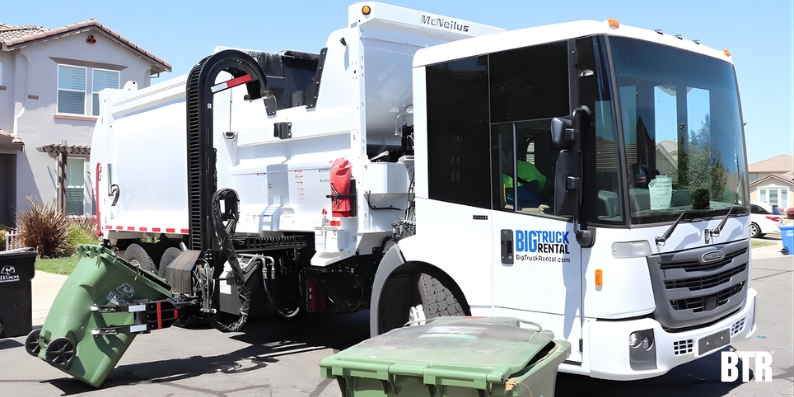
Side loaders perform best in neighborhoods with consistent curbside bin placement and predictable stop patterns. Dense residential areas benefit from automated pickup because routes flow smoothly without manual handling delays.
Narrow streets and limited access points also make side loaders more efficient than rear loaders, since automated arms can service bins without blocking traffic or requiring extra crew movement.
Routes Built for Automated Collection
Automated side loader routes are designed around standardized cart systems, consistent spacing between stops, and organized layouts. These conditions allow trucks to maintain steady movement, predictable timing, and efficient pickup cycles.
In communities built for curbside automation, side loaders integrate naturally into route design and maximize garbage truck efficiency through structured operations.
Single-Operator Collection Routes
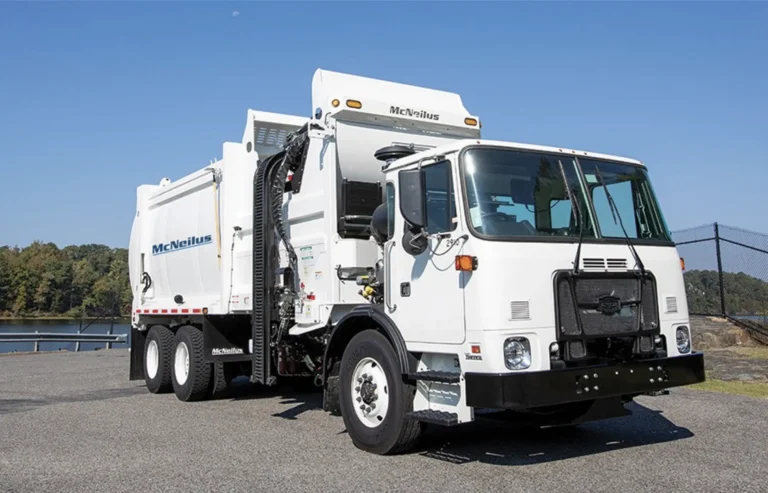
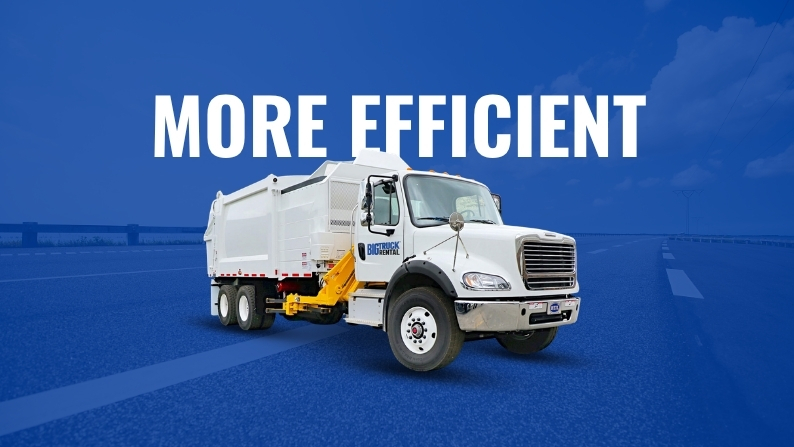
Side loaders support a one-person operation model, where a single driver manages the entire route from inside the cab. This eliminates the need for rear riders or ground crews, simplifying staffing.
Reduced staffing needs make scheduling easier, improve workforce stability, and increase overall operational control.
High-Volume Daily Collection Areas
Routes with many daily stops benefit from shorter cycle times and consistent pickup patterns. Automated arms allow for consistent, rapid bin collection, keeping routes on schedule even at high volumes.
The specifications of a side loader, including arm reach, body capacity, and lift options, ensure these trucks can handle large numbers of stops efficiently while maintaining service quality. More stops per shift can be completed without sacrificing safety or reliability.
Labor-Constrained Operations
Labor shortages and rising labor costs make side loaders more efficient for long-term operations. Fleets can maintain service levels with smaller crews and fewer staffing dependencies.
This efficiency model allows operators to scale service without expanding workforce size.
Safety-Sensitive Environments
Busy residential streets, school zones, and high pedestrian traffic areas benefit from automated side loader operations. Operators remain inside the cab, reducing exposure to traffic and on-foot risks.
With fewer workers outside the truck, routes become safer for both crews and communities, supported by built-in safety features in side loader garbage trucks that promote more controlled, predictable, and secure collection operations.
How Side Loaders Compare to Other Garbage Truck Types
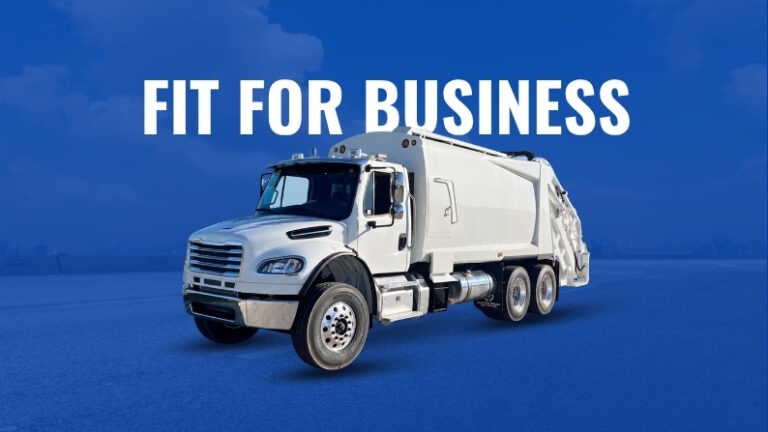
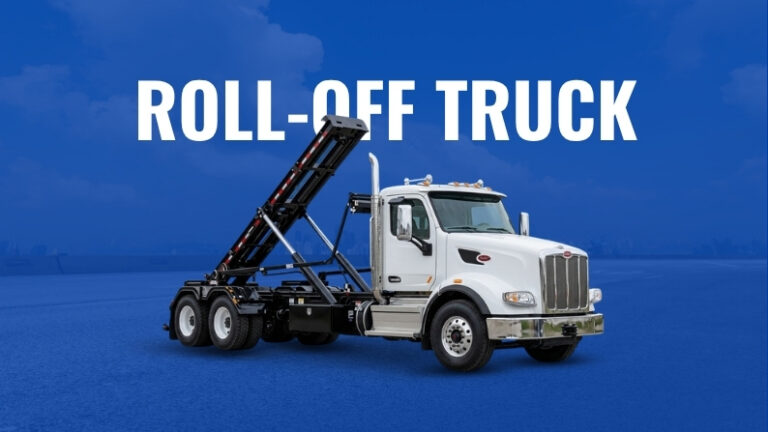
Side loaders differ from rear loaders and front loaders in both their operations and their efficiency models. Rear loaders rely on manual lifting and ground crews, which slows routes and increases labor demands. Front loaders work well for large commercial containers but are less efficient in residential curbside environments.
Side loaders outperform other garbage truck types in structured, residential, automated collection routes where consistency, speed, and labor efficiency matter most. However, rear and front loaders still serve important roles in bulky waste, commercial dumpsters, and irregular layouts.
Operational Benefits That Drive Efficiency
Side loader efficiency is driven by multiple operational advantages:
- Faster collection cycles
- Fewer route delays
- Lower labor requirements
- Reduced physical strain on crews
- More predictable route timing
Together, these benefits improve reliability, consistency, and daily performance across residential waste collection routes.
Cost Advantages of Side Loader Efficiency
Efficiency directly impacts operating costs. Side loaders reduce labor expenses, injury-related costs, overtime needs, and long-term staffing pressures. Optimized routes also improve fuel usage and vehicle utilization.
Over time, these efficiencies translate into measurable operational savings and better cost control for municipalities and private operators.
When a Side Loader Is Not the Best Option
Side loaders are not ideal for every operation. Other truck types perform better in:
- Bulky waste routes
- Irregular container placement areas
- Construction and debris-heavy zones
- Large commercial dumpster collection
- Non-standard service layouts
In these environments, rear loaders or front loaders may offer better flexibility and handling capacity.
How Big Truck Rental Supports Efficient Route Operations
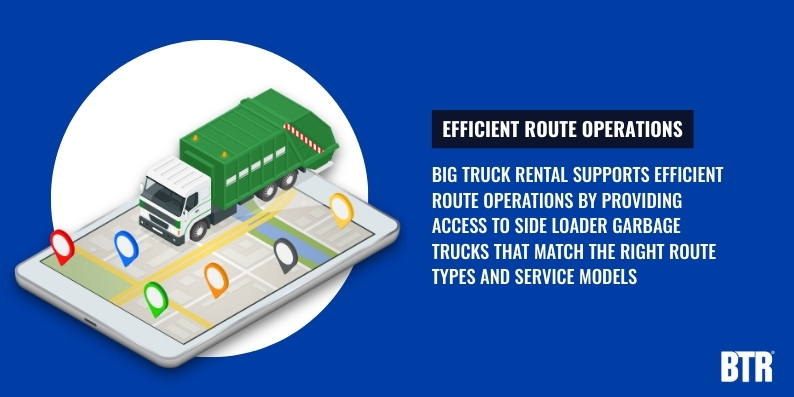
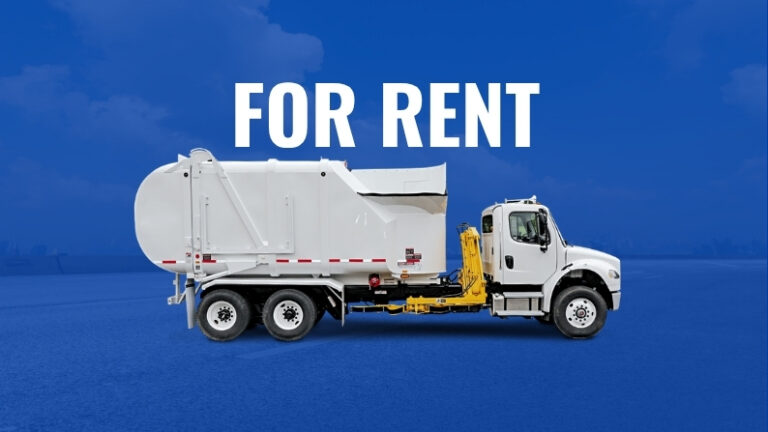
Big Truck Rental supports efficient route operations by providing access to side loader garbage trucks that match the right route types and service models. BTR’s flexible garbage truck rental options allow fleets to adapt to seasonal demand, route expansions, and staffing challenges without long-term ownership pressure.
Short-term rentals help maintain service coverage during maintenance downtime, workforce gaps, and operational transitions, keeping routes stable and reliable while preserving capital flexibility.
Final Thoughts
Efficiency in waste collection depends on route design, layout, staffing models, and operational structure. A side loader garbage truck delivers the greatest efficiency in structured residential environments, automated routes, and labor-optimized operations. When matched to the right conditions, side loaders improve safety, reduce costs, increase reliability, and strengthen long-term service performance. Choosing the right truck type is not just an equipment decision; it’s an operational strategy that shapes efficiency across the entire collection system.
Keep Your Routes Efficient with Big Truck Rental
Big Truck Rental provides side loader garbage trucks and full environmental fleet solutions to support efficient, reliable collection routes for municipalities and waste operators.
Contact us to explore flexible rental options that match your route needs, staffing model, and seasonal demand, so your operations stay smooth, efficient, and on schedule.
FAQs
What types of routes benefit most from an automated side loader?
Automated side loaders work best on structured residential routes with consistent curbside bin placement and predictable stop patterns. These routes allow the truck’s automated arm system to operate continuously without delays, improving overall garbage truck efficiency.
Is a side loader garbage truck good for labor shortages?
Yes, side loaders are ideal for labor-constrained operations because they eliminate the need for ground crews and rear riders. One driver can manage the entire route, making scheduling easier and reducing staffing pressure for municipalities and private haulers.
When is a side loader not the right choice for waste collection?
Side loaders are not ideal for bulky waste routes, irregular container placement, construction zones, or large commercial dumpsters. In these situations, rear loaders or front loaders often provide better flexibility and handling capacity.
How can Big Truck Rental help fleets use side loaders more efficiently?
Big Truck Rental supports efficient operations by providing access to side loader garbage trucks through flexible rental options. This allows fleets to scale service, manage seasonal demand, cover maintenance downtime, and expand routes without long-term ownership pressure.