Not all garbage routes are the same. A tight residential street has very different needs than a busy shopping center or an industrial site. The truck that works in one area can struggle in another. Truck selection affects daily efficiency, safety, fuel use, labor costs, and service reliability. The wrong truck can slow routes, increase maintenance costs, and put pressure on crews. The right truck helps routes run smoother, faster, and safer.
This guide breaks down the main garbage truck types, shows how route design should guide every equipment decision, and explains how Big Truck Rental helps waste operators match trucks to real route needs. The goal is simple. Help businesses choose trucks that fit their routes, not force routes to fit their trucks.
Why Route Type Matters in Garbage Truck Selection
Route type shapes everything. Residential routes look nothing like industrial routes. Commercial zones operate on different schedules. Some streets are narrow. Others have wide access and large service areas. This is why choosing the right garbage trucks for waste operations has to start with route design, not equipment preference.
Here’s what matters most:
- Residential vs commercial vs industrial routes
Residential routes focus on bins and curbside access. Commercial routes focus on dumpsters and loading zones. Industrial routes deal with heavy materials and bulk waste. - Road width and access limits
Tight turns, parked cars, and narrow streets limit truck size and turning space. - Stop frequency and route density
Some routes have frequent stops close together. Others have fewer stops but longer distances. - Container size and waste volume
Small bins need different trucks than large dumpsters or open-top containers. - Traffic patterns and timing
Routes in busy areas require trucks that can operate quickly and safely in traffic.
Route-based planning keeps operations stable. It also lowers wear and tear, improves crew safety, and protects service quality.
Front Loaders
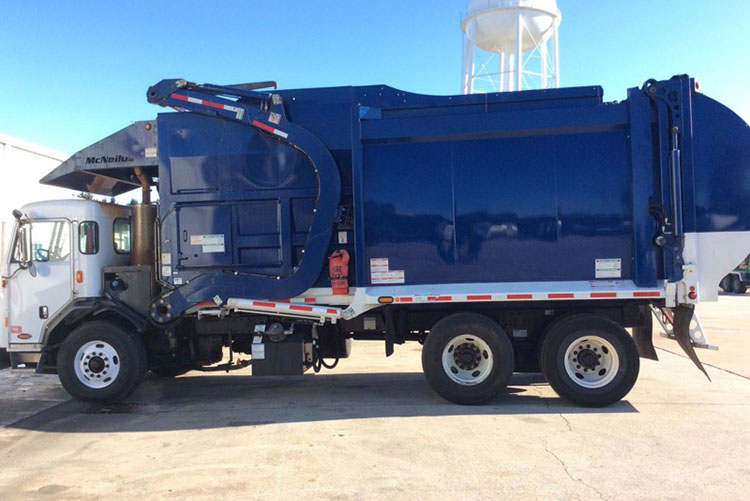
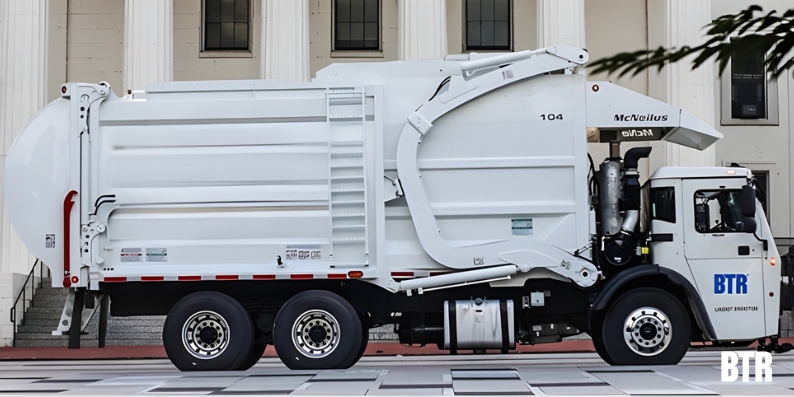
Front loader garbage trucks are a common choice for municipal and commercial waste collection. They are built to handle large dumpsters and centralized pickup points. They work best where waste is gathered in fixed locations rather than spread across streets.
Ideal routes and use cases
- Shopping centers
- Office parks
- Warehouses
- Municipal waste hubs
These trucks support a steady flow of collections. Drivers can service large volumes without constant stops. That improves route speed and lowers labor strain.
Automated Front Loaders
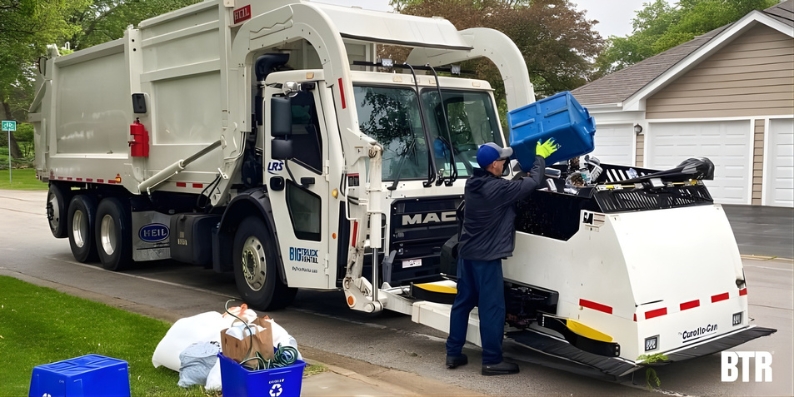
Automated front loaders use mechanical arms to lift and empty containers. This reduces manual handling and lowers physical strain on crews. They support faster service and consistent operation. They also reduce the risk of injury and support smaller crew sizes.
Ideal routes and use cases
- High-volume commercial routes
- Consistent container placement areas
- Routes focused on speed and efficiency
These trucks bring structure and stability to routes that depend on timing and volume control.
Roll-Off Trucks
Roll-off garbage trucks handle large open-top containers. They move heavy, bulky, and irregular waste loads that standard trucks cannot manage.
They support projects that produce high-volume waste in short timeframes.
Ideal routes and use cases
- Construction sites
- Demolition projects
- Industrial cleanup routes
- Bulk disposal operations
Roll-off trucks are built for scheduled, large-volume pickups rather than dense daily routes.
Rear Loaders
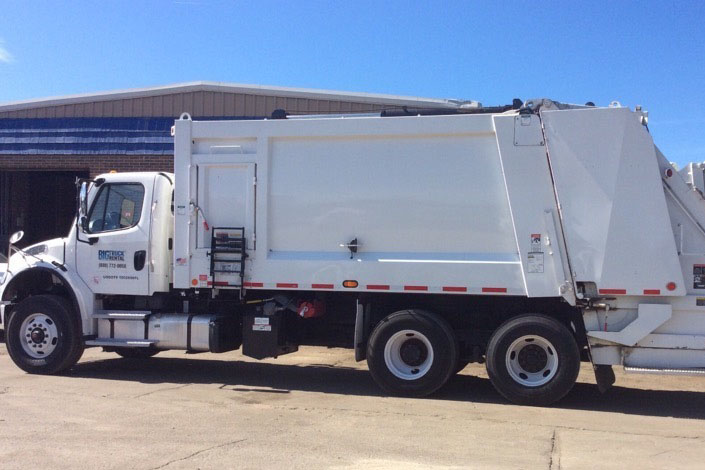
A Rear loader garbage truck offers flexibility. Crews can load waste manually or with assistance. They handle mixed container types and different pickup styles. They work well in areas with varied access points and mixed property types.
Ideal routes and use cases
- Residential neighborhoods
- Mixed-use communities
- Small commercial districts
- Narrow street routes
Rear loaders adapt well to routes that change from block to block.
Side Loaders
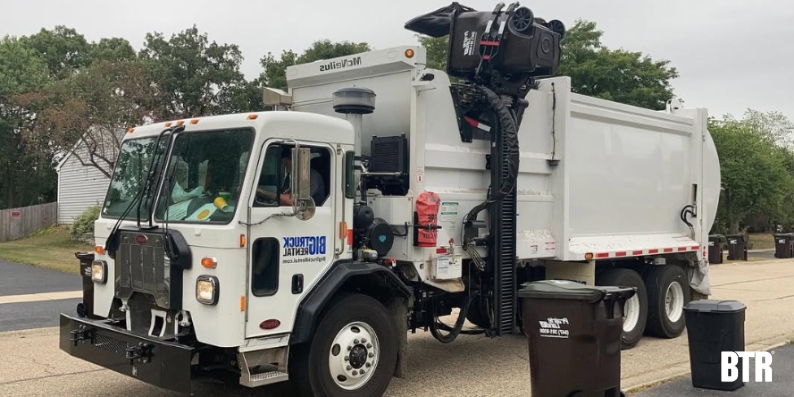
A Side loader garbage truck is designed for automated residential waste collection. They use standardized bin systems and support one-operator collection models. These trucks increase route speed and reduce labor needs.
Ideal routes and use cases
- Suburban residential areas
- Planned communities
- Municipal routes with uniform bin placement
- High-efficiency residential zones
Side loaders perform best when layout and bin placement are consistent.
Grapple Trucks
A Grapple truck is built for bulky waste, storm debris, and vegetation removal. They use hydraulic grapples to lift large and irregular materials. They handle jobs standard garbage trucks cannot.
Ideal routes and use cases
- Storm cleanup operations
- Vegetation and tree removal routes
- Bulk waste pickup programs
- Disaster recovery zones
These trucks support special collection needs rather than daily routes.
Matching Garbage Truck Types to Route Design
Residential routes
- Side loaders
- Rear loaders
Commercial routes
- Front loaders
- Automated front loaders
Industrial and bulk routes
- Roll-off trucks
- Grapple trucks
Route design should always guide truck selection. Not the other way around.
How to Choose the Right Truck for Your Route
Start with the route, not the truck.
- Identify route type and access conditions
- Measure average waste volume per stop
- Review the stop frequency and the distance between stops
- Consider bin types and container sizes
- Match truck design to turning space needs
- Plan for peak demand and seasonal surges
- Align truck choice with crew size and labor model
Good planning prevents future problems. It also keeps costs stable and routes reliable.
Final Thought
Route type should always guide truck selection. Different waste environments need different truck designs. Residential streets, commercial zones, and industrial sites all demand different equipment. The right types of garbage trucks improve safety, efficiency, and service quality. Smart fleet planning starts with route-based decisions, and that is how strong, reliable waste operations are built.
Build the Right Fleet for Every Route
At Big Truck Rental, we help waste operations match the right trucks to the right routes. From residential collection to commercial zones and industrial waste programs, their fleet solutions support route planning, growth, and reliable daily service.
If your routes are changing or your fleet needs better alignment, contact us to explore flexible rental options that support route expansion, peak-demand coverage, fleet upgrades, and consistent waste-collection performance.
FAQs
What are the main garbage truck types?
The main types include front loaders, automated front loaders, roll-off trucks, rear loaders, side loaders, and grapple trucks.
Which garbage truck is best for residential routes?
Side loaders and rear loaders are most suitable for most residential areas, depending on street layout and bin systems.
What truck type is used for commercial waste collection?
Front loaders and automated front loaders are commonly used in commercial zones with dumpsters and centralized pickup points.
Are roll-off trucks used for daily routes?
No. Roll-off trucks are used for bulk waste, projects, and transporting large containers, not for daily curbside collection.
Why does route planning matter so much in truck selection?
Because access, volume, timing, and safety all depend on route design. Poor planning leads to delays, higher costs, and service issues.