Florida’s population growth is reshaping how municipalities manage solid waste collection. As new neighborhoods develop and existing communities expand, sanitation departments are under increasing pressure to maintain reliable trash pickup while managing tight municipal budgets and aging fleets.
For many public works leaders, the challenge is simple to describe but difficult to solve: more homes, longer routes, and higher waste volumes—without the ability to instantly expand fleet capacity.
As a result, many municipalities across Florida are turning to garbage truck rentals as a practical strategy to maintain operational reliability while keeping capital spending under control.
Florida’s Rapid Growth Is Increasing Waste Collection Demand
Florida continues to experience one of the fastest population expansions in the country. According to U.S. News & World Report, Florida ranks as the fastest-growing state in the United States based on percentage growth since 2020, with the population increasing more than 8% to over 23 million residents.
For municipal sanitation departments, population growth directly impacts operations.
Every new development means:
- More households on existing routes
- Increased waste tonnage per collection day
- Longer route completion times
- Additional trucks required to maintain service levels
Cities across Florida—from Tampa and Orlando to Jacksonville, Miami, Fort Lauderdale, St. Petersburg, Tallahassee, Gainesville, and Sarasota—are all seeing continued residential expansion. Smaller but rapidly growing communities such as Ocala, Port St. Lucie, Cape Coral, Lakeland, and Palm Coast are also experiencing similar pressures.
As these communities grow, maintaining reliable trash collection becomes increasingly dependent on having the right number of trucks available.
The High Cost of Expanding a Garbage Truck Fleet
Adding new trucks to a municipal fleet is rarely quick or inexpensive.
A new refuse truck typically costs $300,000 to $500,000, depending on the configuration. For municipalities balancing competing priorities such as infrastructure improvements, public safety, and utilities, adding several trucks to a capital plan can be difficult.
Even when funding is approved, procurement timelines can delay solutions. Garbage trucks often have long manufacturing lead times, which can leave sanitation departments waiting months before new vehicles arrive.
During periods of rapid growth, this delay can create operational challenges. Routes must still be serviced, residents still expect their trash to be collected, and municipalities must maintain consistent service.
Why Operational Reliability Is Critical for Municipal Waste Collection
Trash collection is one of the most visible services local governments provide. When garbage trucks miss routes due to breakdowns or capacity shortages, the impact is immediate—missed pickups, overtime costs, and frustrated residents.
Municipal sanitation leaders work hard to avoid these “oh no” moments when a truck goes down mid-route and there is no replacement available.
Operational reliability is essential for:
- Guaranteeing scheduled trash pickup
- Keeping neighborhoods clean and sanitary
- Maintaining public trust in municipal services
- Avoiding overtime and service disruptions
For many cities, maintaining extra operational capacity has become an important part of ensuring reliable service.
How Garbage Truck Rentals Help Florida Municipalities Keep Up
To address both growth and reliability challenges, municipalities across Florida are increasingly supplementing their fleets with garbage truck rentals.
Rental trucks provide cities with the flexibility to quickly add vehicles when routes expand or service demand increases. Instead of waiting through long procurement cycles, sanitation departments can deploy trucks immediately and maintain route efficiency.
Rental trucks are commonly used to:
- Support new route expansions
- Maintain service during population growth
- Cover vehicles undergoing maintenance
- Avoid service disruptions when trucks break down
- Maintain operational reliability during peak demand
This approach allows municipalities to keep trash collection running smoothly while maintaining flexibility in their long-term fleet planning.
Protecting Municipal Budgets with Flexible Fleet Solutions
In addition to operational benefits, garbage truck rentals can help municipalities manage financial risk.
Large capital purchases can place pressure on municipal budgets, especially during periods of rapid growth. Rental solutions allow cities to maintain service capacity without committing to immediate fleet purchases before long-term demand is fully understood.
This approach also helps create more predictable operating expenses and can reduce the impact of unexpected repair costs associated with aging trucks.
For many public works departments, this flexibility helps balance operational needs with responsible financial management.
Supporting Clean Communities Across Florida
From large metropolitan areas like Miami, Orlando, Jacksonville, and Tampa to fast-growing communities such as Cape Coral, Port St. Lucie, Lakeland, and Ocala, municipalities across Florida are working to keep pace with growth while maintaining reliable waste collection.
With continued population expansion expected across the state, sanitation departments will need flexible fleet strategies that allow them to adapt quickly while protecting municipal budgets.
For many Florida municipalities, garbage truck rentals have become an important tool for maintaining operational reliability, supporting expanding routes, and ensuring communities stay clean as they grow.
As cities continue to evolve, the ability to deploy trucks quickly, maintain consistent service, and manage fleet costs will remain critical to keeping Florida’s communities running smoothly.
Frequently Asked Questions About Garbage Truck Rentals in Florida
Why are Florida municipalities renting garbage trucks?
Many Florida municipalities rent garbage trucks to quickly expand fleet capacity during periods of population growth, cover trucks undergoing maintenance, and maintain reliable trash collection services. Rentals allow cities to deploy trucks immediately without waiting for long manufacturing lead times associated with purchasing new vehicles.
How much does a garbage truck cost for a municipality?
A new garbage truck typically costs between $300,000 and $500,000, depending on the body type, chassis, and specifications. Because of this high capital cost, many municipalities supplement their fleets with rentals to maintain operational flexibility and protect capital budgets.
When do cities typically rent garbage trucks?
Municipalities commonly rent garbage trucks when they need to:
- Add capacity for growing routes or new housing developments
- Maintain service when trucks are down for repairs
- Support seasonal increases in waste volumes
- Avoid service disruptions during fleet maintenance cycles
- Manage demand while waiting for new truck deliveries
What types of garbage trucks can municipalities rent?
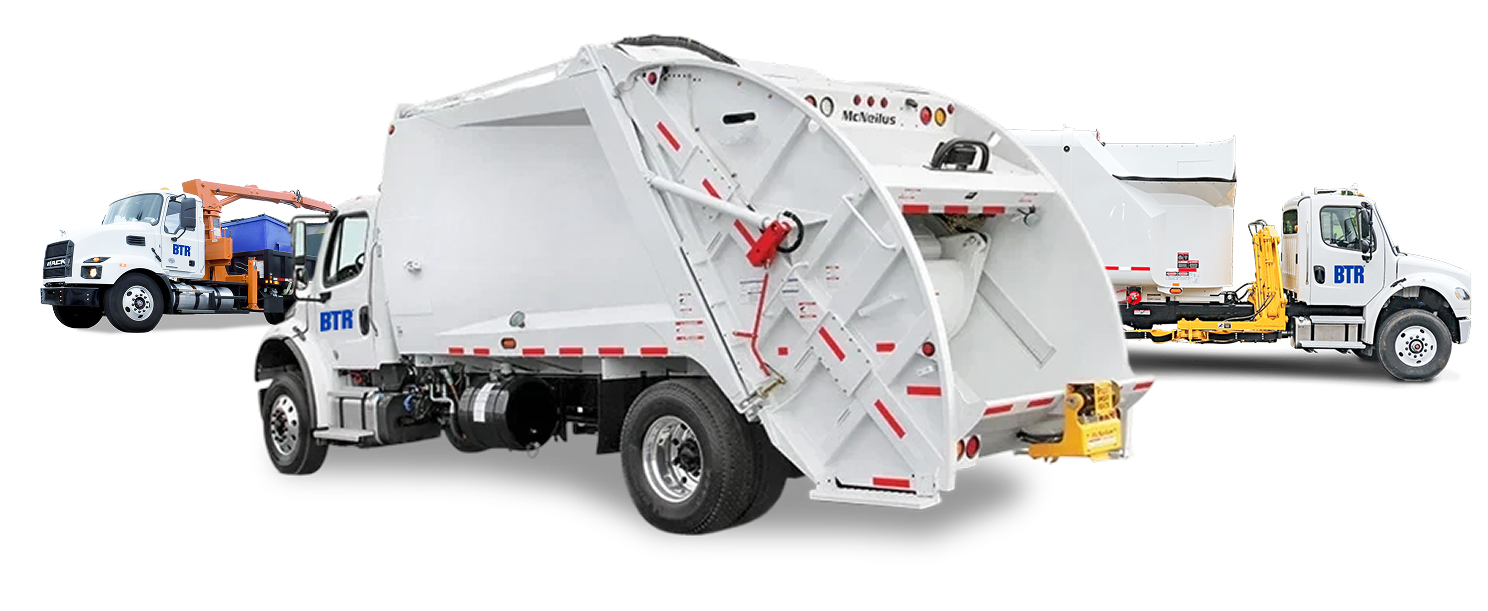
Municipalities can rent a variety of refuse truck types depending on their collection programs, including:
- Front loader garbage trucks
- Automated side loader garbage trucks
- Rear loader garbage trucks
- Roll-off trucks
These trucks are used for residential collection, commercial waste pickup, recycling routes, and bulk waste removal.
How do garbage truck rentals help municipalities maintain reliable service?
Garbage truck rentals provide additional operational capacity so municipalities can maintain scheduled trash pickup even when routes expand or trucks experience mechanical issues. Having access to supplemental trucks helps sanitation departments avoid missed collections, maintain route schedules, and keep communities clean.
Which Florida cities commonly rely on garbage truck rentals?
Cities across Florida—including Tampa, Orlando, Jacksonville, Miami, Fort Lauderdale, St. Petersburg, Tallahassee, Gainesville, Cape Coral, Port St. Lucie, Lakeland, and Ocala—often face rapid population growth that increases waste collection demand. Many municipalities in these areas supplement their fleets with rental trucks to keep up with expanding routes.